

Best vegan sneakers for everyday wear: choose by your routine
The best vegan sneaker for everyday wear is not a universal winner. It is the pair whose shape, fit, feel, materials and styling range match the way you actually spend your week. A clean tennis-inspired trainer may suit a commuter who dresses for a casual office, while a runner- or court-influenced shape may work better with longer walks, relaxed tailoring or sport-led layers.
“Vegan” is an important animal-free baseline, but it does not automatically prove that a trainer is sustainable, durable or comfortable. Use this guide to compare your routine, shortlist the right sneaker profile, check how it is made, then choose a colourway you will genuinely wear often.

Start with your everyday profile, not a ranking
Think in terms of the job your trainers must do. For a minimalist wardrobe or casual office, a classic tennis-inspired silhouette is usually the easiest starting point: a relatively clean upper, restrained branding and a sole that does not overpower tailored trousers. For a retro-athleisure wardrobe or an active commute, a runner-inspired profile can offer more visual energy and a movement-led feel, although a lifestyle runner is not automatically a specialist running shoe. A court-inspired sneaker suits straight-leg denim, cargos and relaxed tailoring when you want more structure and presence. A lighter, movement-focused model makes sense for frequent walking, travel and lighter activity, provided its fit and support work for your feet.
This routine-first framework also gives you a practical way to use LØCI’s silhouette guide. Treat it as a visual starting point rather than a universal ranking: the range separates ØRIGIN, RØK, FLØ, DØPAMINE and VØLT so you can identify a shape that suits your wardrobe, then verify the individual product page for current materials, sizing, care and intended use.


What to compare before you buy
Materials first. Check the upper, lining, insole and outsole separately: they may have different origins and different effects on breathability, flexibility, abrasion resistance and end-of-life options. Recycled ocean plastic, recycled polyester, cork, bamboo, plant-derived content and bio-based blends are specific claims; they are not interchangeable, and “plant-based” does not necessarily mean plastic-free. Look for percentages, named materials, sourcing detail and any recognised certification rather than assuming a green-sounding description tells the whole story.
Comfort and fit next. Look for a removable or clearly described insole, cushioning material, heel and arch structure, outsole grip, flex point and ventilation. Check the size guide, your foot length and width, the toe-box shape, heel hold and whether the upper can accommodate the socks you will actually wear. If possible, walk indoors on a hard surface and notice pressure at the toes, heel slipping and rubbing at the collar. A soft first impression is not enough if your foot moves inside the shoe.
Finally, assess construction and likely use-per-wear. Reinforced toe and heel areas, secure stitching, a well-bonded sole, replaceable insoles, repair options, a useful warranty and a clear take-back route are more meaningful than vague durability language. A pair worn three times a week for two years may be a better practical choice than a more innovative pair that only works with one outfit.


Style, care and a practical shortlist
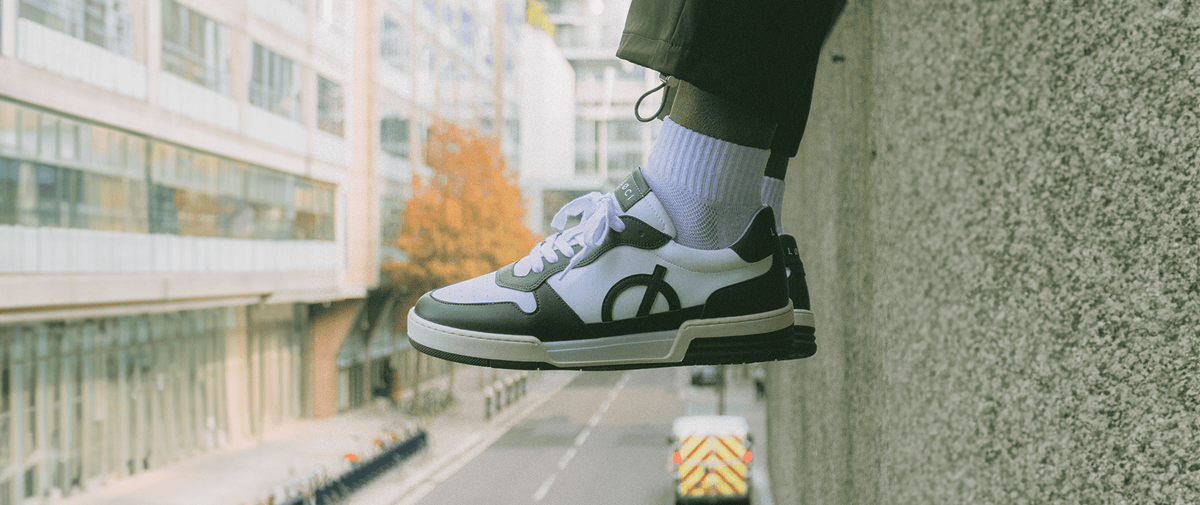
Product examples. ØRIGIN is the clearest classic-tennis reference: LØCI describes the ØRIGIN White/Black silhouette as vegan, comfort-engineered and versatile. FUSION takes an ’80s-runner direction with vegan Bio leather, exterior panelling and a rubber sole, while NEO is the more substantial ’90s basketball-inspired, premium vegan-leather option. FLØ and DØPAMINE are movement-led references, with LØCI describing FLØ as lightweight and made from recycled ocean plastic, and DØPAMINE as 100% vegan, breathable and cushioned. These descriptions indicate design intent, not specialist running, tennis or training performance.
Checklist before ordering: confirm the profile suits your week; check the full material breakdown and any certification or sourcing evidence; review sizing, width, returns, toe room, heel hold, cushioning, breathability and grip; and choose a colourway that works with at least three regular outfits.
Care matters after purchase. Read the brand’s material-specific guidance before ordering. LØCI’s care guide advises protecting trainers before wear, using an appropriate cleaning kit and avoiding machine washing when it may alter the structure or finish. Clean by hand, dry away from direct heat and rotate pairs so moisture and compression can recover.
FAQ: Are vegan sneakers suitable for everyday wear and light movement? Often, yes, when the fit, cushioning, grip and breathability match your walking and commuting needs. Do not treat a lifestyle trainer as a specialist running, court or gym shoe unless the manufacturer explicitly designs and tests it for that activity.
FAQ: What is the difference between vegan and recycled or plant-derived? Vegan means the product is intended to contain no animal-derived materials. It does not specify whether the components are virgin synthetic, recycled, plant-derived or a blend, so check which component each claim describes and in what proportion.
FAQ: How should I choose between classic tennis, runner, court and movement-led shapes? Start with the silhouette that fits your wardrobe and routine, then let your foot shape, comfort needs and the product’s stated use decide the final choice. For care, follow the brand’s guidance, remove dirt promptly, clean gently by hand, air dry naturally and avoid harsh solvents, high heat and unauthorised machine washing.
A considered everyday vegan sneaker earns its place by fitting your real life: comfortable for the commute, appropriate for your wardrobe, clear about its materials and durable enough to keep in rotation. Compare the whole product rather than relying on the vegan label, and choose the pair you will wear and care for consistently, not simply the one with the loudest sustainability claim.