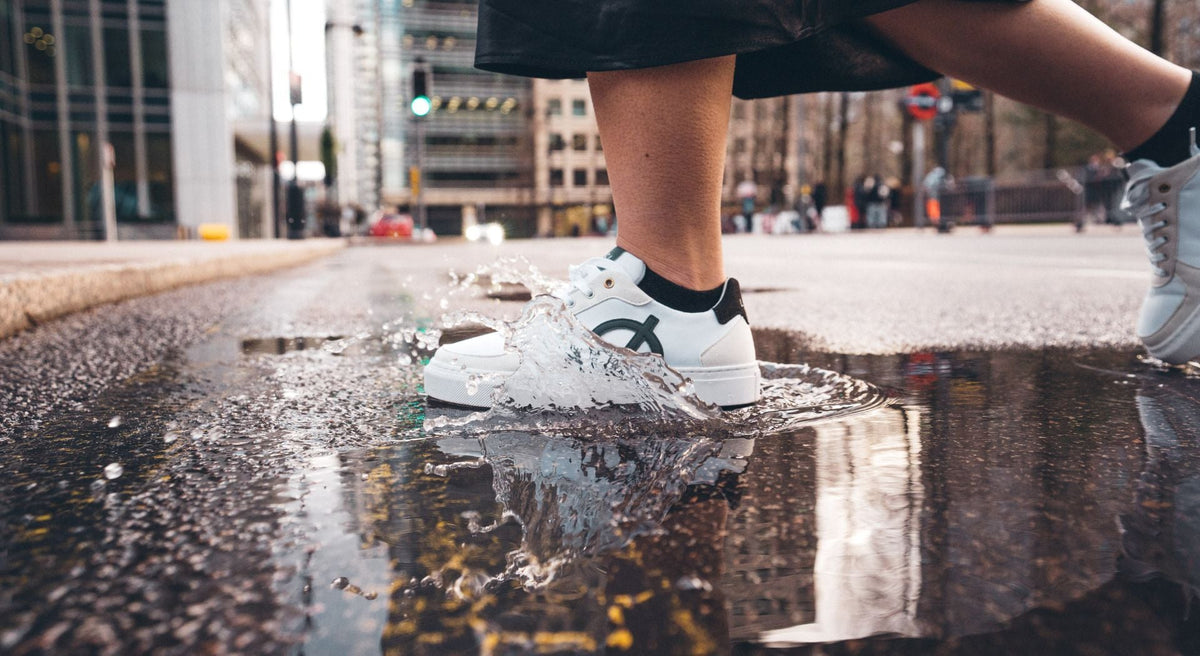

Article: When Should You Repair, Reuse or Replace Vegan Trainers?

When Should You Repair, Reuse or Replace Vegan Trainers?
A worn pair of vegan trainers is not automatically ready for the bin, and it is not automatically suitable for another owner. The useful question is what has changed: is the issue cosmetic, maintenance-related, locally repairable, still safe to wear, or a sign that support and structure have failed?
Use this decision tree: first ask whether you can safely keep wearing the pair; then whether a cobbler or specialist repairer can address a local fault; then whether someone else could use them; finally, investigate a verified take-back or recycling route. A vegan label describes the materials in broad terms. It does not prove durability, repairability or recyclability.
Inspect both trainers in good light, compare left with right and check them after cleaning and fully air-drying. If either shoe feels unstable, contaminated or significantly less supportive, stop wearing it until the problem has been assessed.

1. Can I safely keep wearing these trainers?
Start with the outsole, sole bond, heel and footbed. Light scuffs, creasing, faded colour and surface marks are usually cosmetic when the upper remains intact, the sole is firmly attached and the pair still feels stable and comfortable. These signs usually call for careful maintenance rather than immediate replacement.
Maintenance-related changes can include dirt, mild odour, dampness, flattened laces or a tired insole. Follow the exact model’s care guidance: LØCI’s official Care Guide recommends a suitable protector before wear, wiping clean with an appropriate cleaning kit and avoiding the washing machine because it may change the materials’ structure or finish. Air the pair fully between wears, rotate with another pair where possible, and replace laces or a removable insole only when the brand or a repairer confirms compatibility.
Use a cobbler or specialist repairer for loose stitching, a lifting sole edge, a worn heel section, a damaged eyelet, a torn lining or a flattened insole. These faults may be local, but the repairer should assess the construction before work begins.
Stop wearing the trainers until they are assessed if the heel is unstable, the sole is dangerously loose, the footbed has collapsed, support has markedly failed, the outsole is worn smooth in a way that affects grip, or either shoe causes persistent discomfort. Also stop if the pair is mouldy, contaminated, soaked through and not recoverable, or has been exposed to a substance that may make it unsafe. Do not try to disguise structural damage with household glue, harsh solvents, bleach, machine washing or direct high heat.
Judge the construction and condition rather than the vegan label. The same fault may have a different answer on different models.

2. Can they be repaired, or is replacement more sensible?
A repair is worth assessing when the fault is local and the upper, fit and overall structure remain sound. Typical examples include loose stitching, a lifting sole edge, worn heel sections, damaged eyelets, a torn lining or a flattened insole. A qualified cobbler or specialist repairer should inspect complex bonding, sole separation, support and structural failures. Do not assume that an adhesive repair will restore safe performance.
Ask the repairer whether the damaged part can be replaced without weakening the shoe. Ask whether the adhesive is compatible with the material and finish. Ask whether the sole, lining, eyelets, laces or insole can be repaired or replaced. Ask whether the result will preserve grip, stability and comfort. Finally, ask whether the cost is proportionate to the remaining life of the pair.
Ask the brand whether the exact model has care notes, compatible replacement parts, warranty cover or a recommended repair route. These are questions to investigate, not promises that a particular LØCI model is repairable.
Repairing an upper is rarely sensible if the midsole, bonding, heel stability, fit or cushioning has already failed. A tidy patch cannot compensate for a collapsed footbed or a sole that is separating across a large area. If the repairer cannot give you confidence in safe, comfortable use, replacement may be the more honest option. Keep any assessment or repair receipt with the pair’s care information.

3. Can someone else use them?
If the pair is clean, dry, wearable and structurally safe, reuse can come before recycling. Clean it according to the model’s instructions, pair both trainers, remove personal items, replace missing laces if practical and describe the condition honestly. Mention scuffs, creasing, odour, stains, repairs and remaining tread. Include clear photographs of the uppers, soles, size label and any wear. Resale, swapping or gifting may suit a pair that no longer fits your wardrobe but still feels safe for another person’s commute or everyday use.
Do not donate or resell trainers that are mouldy, contaminated, soaked through and not recoverable, structurally unstable, dangerously loose at the sole, severely unsupportive or otherwise unsafe. A textile bank is not automatically a footwear-recycling route, and donation is not a guarantee that an organisation can use the pair. Check the recipient’s current rules, accepted condition and whether it accepts footwear before handing the trainers over.
End-of-life checks
If continued wear and reuse are no longer sensible, investigate the actual end-of-life route. “Recycled content” describes what went into a component; “recyclable” describes a possible technical route; “take-back” describes collection; and “downcycled” usually means material is recovered for a lower- or different-value use. None of these terms alone proves that your finished pair will be processed.
Verify who accepts the trainers, where the route operates, what condition and materials are allowed, whether the pair is sorted for reuse or material recovery, and what happens to rejected items. Look for current operator instructions and a named partner rather than relying on a general claim. LØCI’s end-of-life guide prioritises continued use, then repair or reuse, followed by a verified take-back or recycling route, with disposal as a last resort. It does not establish that every model is repairable or accepted by a particular scheme.
Common questions
Can cleaning delay replacement? Yes, when the problem is dirt, mild odour or a surface mark and the trainer remains stable. Follow the care guide rather than using a universal remedy.
Is a worn upper enough reason to stop? Not necessarily. If the structure, support, grip and fit remain sound, ask a repairer when panels, stitching or bonding are affected.
Should I replace a pair that still looks good but feels unstable? Yes. Comfort, support and structural integrity matter more than appearance.
Can I assume a vegan trainer is recyclable? No. Verify the finished shoe, the current operator and the local route.
What should I seek in the next pair? Look for clear material and care information, realistic repair guidance, replaceable parts where offered, a well-supported fit and a documented end-of-life route. A label alone is not enough.
A pair that is clean, stable and comfortable can keep earning its place, even if it is no longer perfect-looking. When those qualities have gone, prioritise safe use over keeping the trainers in service at any cost.
For your next pair, ask about material composition, care instructions, compatible protectors and cleaners, replacement laces or insoles, repair or warranty support, and the model’s actual end-of-life route. Clear answers are more useful than assuming that vegan, recycled or recyclable means the same thing.