
How to Choose Trainers That Transition Smoothly from Smart to Casual Outfits
Ever stood in front of your wardrobe wondering which trainers will work for a client meeting but will not look out of place at after-work drinks? Choosing trainers that shift cleanly from smart to casual comes down to silhouette, material, and the demands of each occasion. A streamlined profile and refined, matte materials read smart, while chunkier soles and bold textures lean casual, so pick the elements that match the setting.
Discover how to identify your occasions and wardrobe goals, prioritise fit, proportion, and comfort, and choose colours, textures, and materials that bridge smart and casual. Find straightforward ways to pair trainers with tailored pieces, and build casual looks with lasting versatility so every pair earns its place in a compact, adaptable wardrobe.

Map everyday occasions and define clear wardrobe goals
Start by listing the occasions you need trainers for, from client-facing meetings to weekend errands. For each, note the minimum level of formality so you can eliminate silhouettes that are clearly too casual or too formal. Use shoe silhouette and sole profile as quick proxies for formality: low-profile uppers and thinner soles tuck neatly under tailored trousers, while chunky soles and visible tread read as sporty. Inspect materials and finishes: smooth leather or fine suede hold shape and respond to polishing, whereas heavily textured fabrics, glossy synthetics, and overt branding tend to look casual. Decide whether you prioritise versatility, a polished appearance, comfort, or low maintenance, then choose a limited colour palette with one or two accent colours so a single pair coordinates with multiple outfits.
Inspect construction details, such as stitching, panelling, and discreet branding, to gauge how dressy a trainer will read in real life. Build simple outfit formulas and test them on camera: pair the trainers with a blazer, shirt, and slim chinos for smart occasions, then with a T-shirt, relaxed jeans, and an overshirt for casual looks. Compare the photos to see which silhouettes, materials, and colours transition smoothly between looks, and rule out pairs that consistently read too casual or too formal.
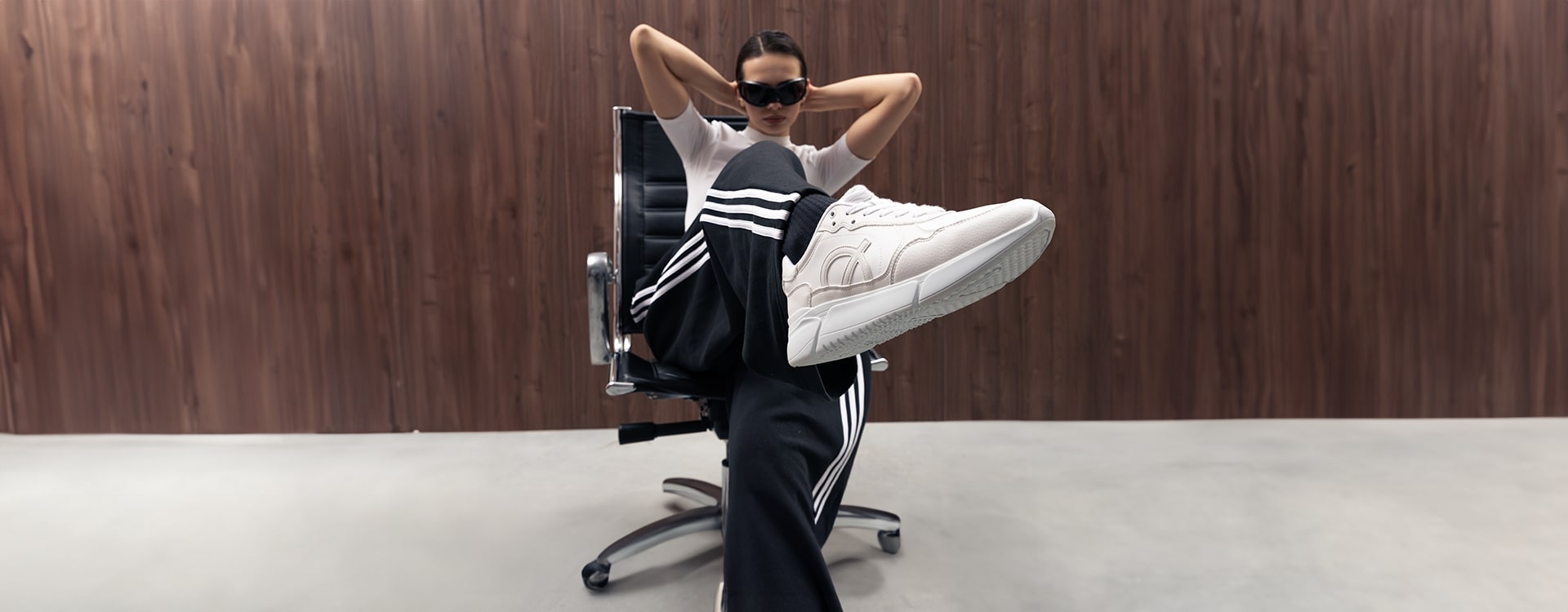
Choose a refined sweat set for polished off-duty outfits.

Put fit, proportion, and comfort first
Start with fit. Aim for a thumb's width of space in front of your longest toe, a heel that stays put, and no pinching across the forefoot. Try trainers while standing so your feet bear weight and spread naturally. Bend the shoe where your toes meet the sole; if it folds at the shoe's midfoot, it will feel unstable in everyday use. Press the heel counter, the back part that cups your heel, to check it is firm enough for stability without being painfully rigid. Walk on a hard floor to reveal heel slip or excessive forefoot spring.
Match the sneaker silhouette to your trouser cut and proportions. For tailored or tapered trousers, choose low-profile, narrow-toe sneakers; for relaxed or cropped cuts, opt for slightly chunkier soles to avoid a visual break at the hem. Select materials and finishes that read smarter: smooth leather, fine-grain suede, and matte surfaces. Favour tonal colours, minimal branding, waxed or flat laces, and a neatly trimmed sole edge to keep the line clean. Use low-profile cushioning and removable insoles to accommodate orthotics. Steer clear of overt mesh panels, glossy plastics, and heavy athletic moulding, which read as casual sportswear.
Wear cushioned, breathable socks to prevent heel slip

Choose colours, textures, and materials that fuse smart and casual style
For sneakers and trainers, favour a restrained palette and continuous colourways so the sole and upper read as one plane; this reduces the visual cues of sportswear. Choose smooth vegan leather, fine-grain vegan nubuck, or microfibre suede over open mesh and heavy knit, since uniform surfaces reflect light evenly and more closely resemble polished dress shoes. Pair those materials with a low-profile sole, a narrower toe box, minimal external stitching, and discreet eyelets to compress the athletic silhouette and create cleaner lines that sit comfortably with tailored trousers, a blazer, or smart-casual separates.
Coordinate your trainers with one or two other elements in your outfit, such as a belt, coat, or trousers. Add a single contrasting piece to signal casual intent, while maintaining a coherent colour line that draws the eye vertically and visually lengthens the leg. Keep uppers free of scuffs, clean the soles, condition smooth leather, revive suede nap with a brush, and swap bulky laces for slim, flat ones to preserve a smart appearance; slim laces reduce bulk at the instep and keep the shoe’s lines clean. These upkeep habits, combined with thoughtful choices in materials and construction, remove the visual cues that mark trainers as purely casual and broaden the occasions they suit. Small, considered choices in colour, texture, silhouette, and maintenance help trainers move confidently between high street smart and relaxed ensembles.
How to make trainers work with smarter outfits
- Smart-trainer styling rules: favour muted, matched colours to unify the sole and upper visually, choose a low-profile sole and a narrower toe box to slim the profile, minimise external stitching and use discreet eyelets for neater contours, and coordinate trainer tones with one accessory while adding one contrasting element to introduce a casual edge.
- Materials and construction to seek: opt for smooth leather, fine-grain nubuck, or brushed suede rather than open mesh or heavy knit, because their smoother textures read as dress leathers; prefer low-profile soles, narrower toe boxes, minimal visible stitching, and subtle eyelets, as these construction cues reduce sporty associations and sit better with tailored trousers and blazers.
- Care, maintenance, and finishing touches: clean soles and remove scuffs, condition smooth leather and revive suede nap with a brush and gentle eraser, swap bulbous laces for slim flat ones, apply a protective spray for weather resistance, and store on shoe trees or in dust bags; these rituals preserve a polished appearance and extend the occasions trainers will suit.

How to style trainers with tailored pieces for effortless polish
Choose low-profile trainer silhouettes in smooth leather or suede to keep lines clean alongside tailored pieces. Chunky technical soles interrupt a suit's silhouette and read athletic rather than intentional. Aim for ankle-grazing hems or a minimal break so the trainer sits against the leg and the trouser line stays visible. A long cuff swallows the shoe and shortens the leg. Echo a trainer's colour or texture elsewhere, such as a belt or outer layer, then use complementary neutrals for cohesion without literal matching. Pair unstructured blazers, tapered or cropped trousers, and a fine-gauge knit or crisp T-shirt to balance formal construction with relaxed footwear.
Keep uppers clean, replace worn laces, and favour slim, tonal soles rather than chunky ones; tidy, intentional details change how an outfit reads. A polished upper and fresh laces signal attention, slim soles keep the focus on silhouette, and a neat hem, subtle texture contrasts, and consistent colour accents create a cohesive, considered look. When these elements align, trainers move effortlessly between smart and casual without undermining either style.
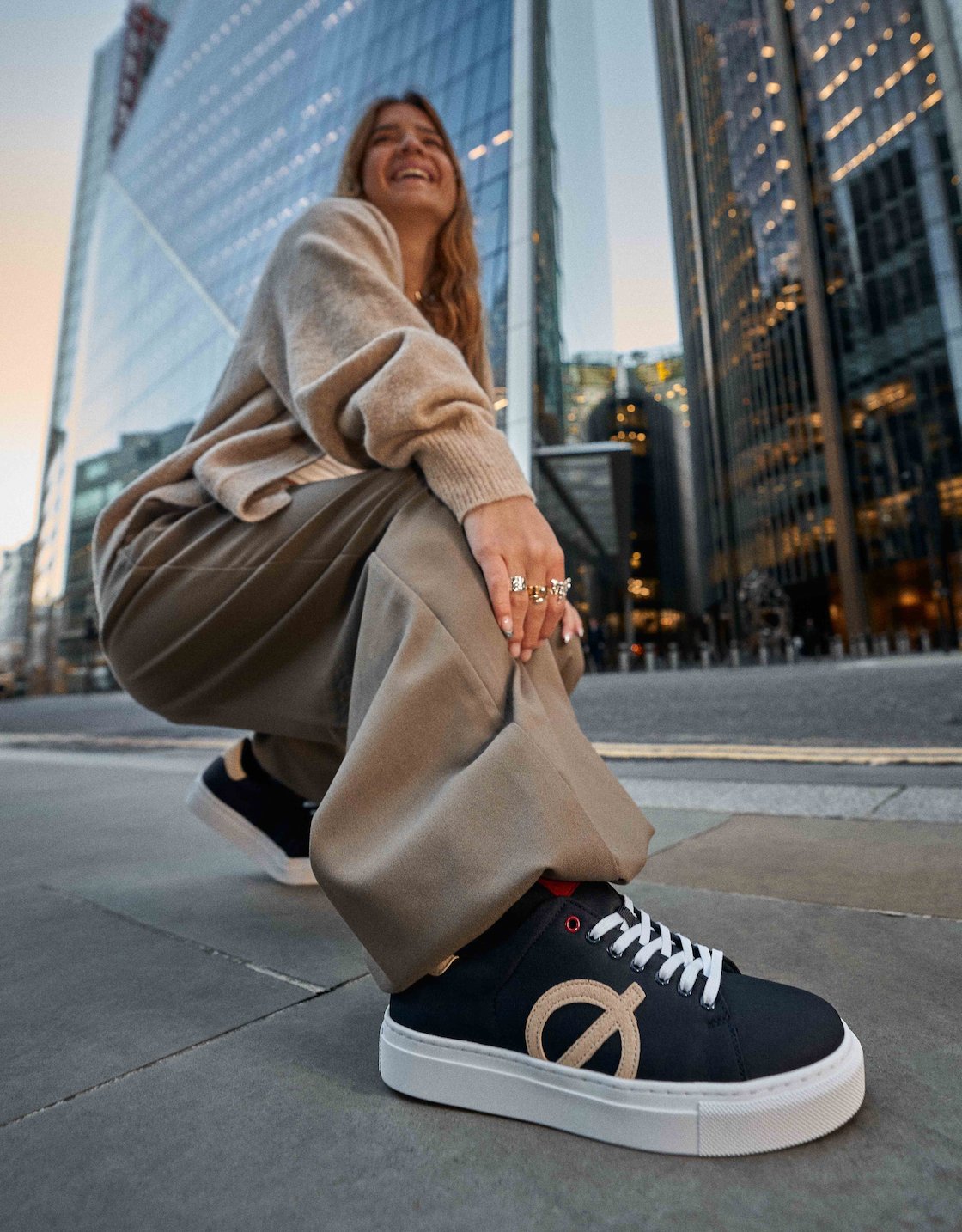
Anchor smart-casual outfits with a refined, minimal sweatsuit.

How to Build Casual Looks with Timeless, Everyday Versatility
Build a concise wardrobe formula around neutral colour, simple silhouettes, and interchangeable pieces. Pair low-profile white or navy trainers with dark slim jeans, tailored chinos, or a structured blazer to move between casual and smart looks without changing footwear. Choose materials that read dressier: smooth leather or fine suede respond well to polish or brushing, while canvas and heavy textures stay distinctly relaxed. Judge a trainer by stitch lines, tonal soles, and minimal branding. Mind proportions: opt for a low-to-mid profile sole and a streamlined toe, and wear slimmer trousers with a slight break so the shoe sits under the hem rather than dominating the silhouette.
Keep trainers looking deliberate with simple care: wipe and treat smooth uppers, brush nap fabrics, replace frayed laces, and refresh worn soles before they rub through a tailored hem. Small styling moves shift the mood: tuck a shirt, add a structured coat, or swap in fine ankle hosiery to elevate the same pair. To relax the look, roll shirt sleeves, loosen layers, or choose thicker liners for a chunkier silhouette. Finally, pick a trainer colour or texture that echoes another accessory, such as a belt or watch strap, to create a cohesive line between smart and casual.
Opt for a small set of low-profile trainers in smooth vegan leather or fine plant-based suede with tonal soles. Tonal soles reduce visual weight and keep the silhouette streamlined, helping the shoes bridge smart and casual more reliably than trend-led designs. Prioritise fit, proportion and easy care so each pair tucks neatly under tailored trousers, sits confidently with a blazer and still reads relaxed with jeans.
Follow these steps: define the occasions you need to cover, assess construction and materials, choose a restrained colour palette, and test outfit formulas to see how each trainer performs. Photograph combinations to review fit and balance, keep uppers and soles clean, and rotate pairs with intention so every trainer earns a distinct role in a compact, adaptable wardrobe.
FAQ
What should I consider when choosing trainers that work for both client meetings and after-work drinks?
Start by listing settings and the minimum formality for each, then use silhouette and sole profile as quick proxies for formality, inspect materials and finishes, decide whether you prioritise versatility, a polished appearance, comfort, or low maintenance, and settle on a limited colour palette with one or two accent colours so one pair coordinates multiple outfits.
How do I ensure trainers fit and sit well with tailored trousers?
Aim for about a thumb's width at the longest toe, a heel that stays put, and no pinching across the forefoot; choose low-profile, narrow-toe styles for tapered or tailored trousers and slightly chunkier soles for relaxed or cropped cuts to avoid a visual break at the hem.
What materials and colour choices make trainers read smarter?
Choose smooth leather, fine-grain nubuck, or brushed suede in restrained, continuous colourways with tonal soles, minimise external stitching and visible branding, and favour matte or fine finishes to compress the athletic silhouette and resemble dress shoes.
Can trainers be worn with blazers and tailored pieces without undermining the outfit?
Yes; low-profile leather or suede trainers with narrow toes, trimmed sole edges, ankle-grazing hems, and coordinated tones sit neatly with unstructured blazers and tapered trousers to preserve a clean, intentional line.
How should I maintain trainers so they keep a polished appearance?
Clean soles and remove scuffs, condition smooth leather and revive suede nap with a brush, swap bulbous laces for slim flat ones, apply a protective spray, and store on shoe trees or in dust bags to extend the occasions the trainers will suit.