

3 Ways to Style Trainers with Work Outfits and Stay Professional
Wearing trainers to the office can refresh your work wardrobe or undermine your professional image. Many people want comfort without sacrificing credibility; the difference comes down to style, colour, and context, so opt for tailored silhouettes and neutral tones to keep the look intentional.
Use this guide to assess workplace expectations and your daily routine, choose and style office-friendly trainers and high tops, and finish outfits with targeted tailoring, smart accessories, and straightforward shoe care. Small tailoring tweaks, tidy footwear, and considered accessories can change the impression trainers make in a professional setting.

1. Assess workplace expectations and shape your daily routine
Begin by reading your employer's dress code, then watch managers and peers in similar roles to see what they actually wear. Map footwear to tasks: list which parts of your day demand mobility, and which require face-to-face professionalism. For active days, choose supportive, low-profile trainers or sneakers; for client meetings, opt for sleeker, minimal styles, or bring a quick shoe swap. In creative teams, high tops or textured trainers can signal intentional style, while senior-client settings favour pared-back designs that read as professional. Pilot a polished sneaker outfit for a short trial, note colleagues' reactions, and ask a trusted mentor or HR representative for candid feedback. Combining policy review, observation, and a brief trial reveals unwritten norms faster than relying on the written rules alone.
Set objective acceptability criteria for workplace footwear: clean condition, minimal or no visible logos, neutral colours, slim silhouettes, and no scuffed or overtly athletic trainers. Apply these standards consistently so your choices send a clear signal; visible logos and athletic cues often register as casual, while neutral, well‑maintained silhouettes project professionalism. Keep a compact spare pair of smart shoes or slip-ons at work, and carry a blazer or smart coat to smarten a trainer look before unexpected meetings, allowing you to control impressions without sacrificing practicality. Run short trials and ask a few trusted colleagues for honest input to reduce risk. Consistent rules for cleanliness, logos, and silhouette make it easier for others to read your intent.

2. How to choose and style office-friendly trainers and high tops
Choose low-profile leather or matte suede trainers or high tops with minimal paneling and a low sole profile. Smooth uppers hold their shape and reflect light subtly, producing cleaner lines than mesh or heavy sport fabrics. Prefer a muted, tonal colour palette, such as black, navy, stone, or grey, and match the sole colour to the upper to reduce contrast; a large white sole creates strong contrast that signals a casual aesthetic, while tonal shoes read as more considered. Small hardware and upkeep choices matter too: swap in flat, waxed laces, opt for thin wool or low-profile liners, and clean and condition uppers and soles regularly so the shoe presents as intentional rather than neglected.
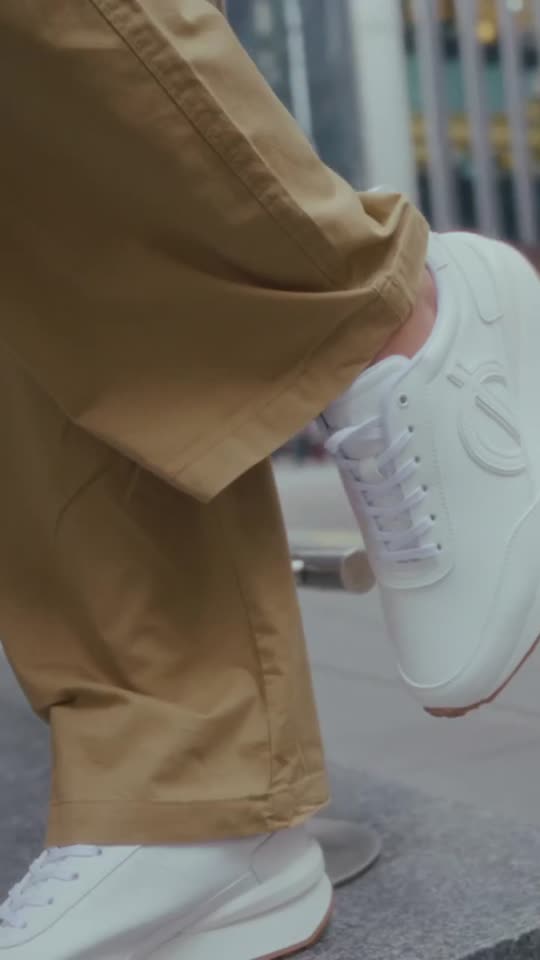
Deliberately balance proportions. Pair slim, tapered trousers or cropped, tailored hems with high tops to make the trainers look intentional. If you favour chunkier trainers, counterbalance their bulk with a structured blazer or a longer coat to anchor the silhouette. Integrate trainers through styling details: cuff or crop trouser hems, pair a midi skirt with slim trainers and opaque tights, or echo the shoe colour in a belt or bag. Those deliberate links across garments and accessories make the trainers read as a planned component of the outfit, not an afterthought.

3. Elevate outfits with tailored cuts, smart accessories, and shoe care
Tailor trousers and blazers for cleaner proportions. Shorten or taper trouser legs so they sit neatly at the top of trainers, and remove excess fabric from the seat to create a smoother silhouette. Shorten jacket sleeves to reveal a sliver of shirt cuff. Choose structured suiting and outerwear, such as single-breasted blazers or fitted coats with defined shoulders, and layer slim pieces underneath so the outfit reads composed rather than slouchy. These adjustments reduce bulk around the ankle and wrist, creating an intentional line that sharpens an otherwise casual look.
Choose smarter accessories: replace a rucksack with a structured tote or a slim brief-style bag, add a simple belt, and pick a pared-back watch with hard-edged hardware to anchor the look. Maintain your trainers: clean the uppers, swap in neat laces, polish smooth materials, and revive scuffed white rubber, while checking sole condition and stitching. Pay attention to finishing details — wear low-profile, colour-co-ordinated ankle liners when the ankle is visible, press trouser creases, and tidy shirt hems. Small adjustments, such as discreet insoles for better posture and consistent shoe care, elevate the outfit’s perceived polish without drawing attention to the footwear.
Taken together, consistent choices about silhouette, colour, and condition help trainers read as considered components of a work wardrobe. Opt for low-profile uppers in plant-based leather or microfibre suede, tonal soles, and neat waxed laces. A slim toe box, matte finish, and restrained branding keep the look refined; pair with tapered trousers or a structured blazer to create cleaner lines suited to professional settings.
Finally, assess workplace norms: observe colleagues' dress, note meeting formality, and mark client-facing days on your calendar. Pilot polished looks with a trusted colleague; wear the outfit on a low-stakes day and ask for specific feedback on fit, colour, and footwear. Leave an extra set of trainers and a smart coat at the office so you can adapt quickly. Assessing expectations, choosing and styling thoughtfully, and prioritising tailoring and shoe care turns comfortable trainers into intentional outfit elements, letting you move comfortably without undermining your presence.