

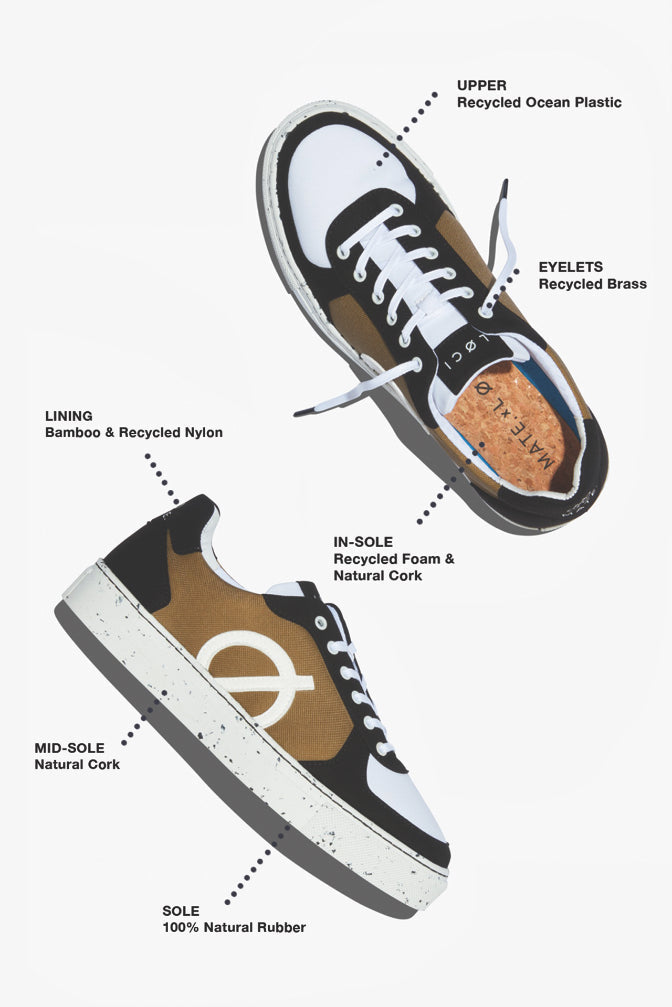
10 Vegan Materials That Make Sneakers Last Longer and Feel Luxurious
Well chosen materials and thoughtful construction mean vegan sneakers and trainers need not crease, delaminate or lack the tactile richness of traditional leather. The right combinations deliver lasting performance and a premium, leather-like feel while honouring ethical and sustainable principles.
This post breaks down ten material choices, from premium plant leathers and bio-based polymers to recycled textiles, robust outsoles and breathable linings. For each material we explain how it contributes to durability and refinement, and highlight the uppers, midsoles, linings, finishes and repair strategies that matter most. Use these insights to choose vegan sneakers that perform, age well and hold their place on the high street.

1. Prioritise sustainable materials that extend lifespan and enhance luxury
For trainers and sneakers, opt for high-density microfibre uppers with a tight weave and multi-layer construction. That combination gives strong abrasion resistance, high tensile strength and a refined surface that ages gracefully. Cellular mycelium and plant-fibre leathers deliver a leather-like grain that can develop a subtle patina and, where coatings are minimal, will biodegrade under the right conditions. If compostability or a consistently smooth finish matters, inspect the final coating and finish quality. For footbeds and soles, pair cork for lightweight cushioning, natural antimicrobial benefits and excellent compression recovery with a natural or vulcanised rubber-blend outsole. Wherever possible, review material density and rebound or compression specifications to confirm the durability and ride you expect.
When choosing trainers or everyday footwear, opt for high-tenacity recycled textiles with a tight weave and a higher denier. These fabrics resist pilling and microfibre loss, retain colour and take durable water-repellent finishes well. Check that any DWR treatment is PFC-free to favour a more sustainable finish. Structured linings, stitched heel counters and reinforced toe boxes help preserve shape, reduce wear at stress points and improve fit. Look for stitched reinforcements, removable insoles and stable counters you can feel when trying items on, and request abrasion or rebound test results or material specifications where available.
Pair durable trainers with a mid-weight, structured everyday layer.

2. Assess the ethical and environmental footprint of vegan materials
Insist on third-party life cycle data from suppliers, such as an Environmental Product Declaration (EPD) or a concise life cycle assessment (LCA) that reports kg CO2e per pair, litres of freshwater used and the percentage of recycled content, rather than relying on marketing claims. Use those metrics to compare materials and expose trade-offs between manufacturing emissions, water intensity and dependence on virgin fossil inputs, and avoid assuming plant-based means lower impact. An evidence-led approach will reveal where a low-carbon material carries a high water burden, or where recycled content reduces virgin inputs but tells you little about durability.
Request specific test reports to probe chemical safety and durability: Oeko-Tex or equivalent, REACH compliance, and results for abrasion resistance, colourfastness and microfibre release. Then judge whether a longer service life offsets any non-biodegradable finishes or toxic treatments. Assess end of life and circularity by checking whether components are mono materials, mechanically separable or designed for repair, and ask for evidence of recyclability or compostability to recognised standards such as EN 13432 and OECD biodegradability tests. Verify supply chain transparency and social impacts by requesting feedstock origins, audit summaries and worker welfare documentation, and consider upstream harms such as land use change or biodiversity loss alongside on-sneaker performance. Make trade-offs explicit with a simple decision matrix that scores carbon intensity, water footprint, toxicity, biodiversity risk and expected service life. For example, weigh compostable plant leathers that depend on agricultural inputs against durable synthetics that relieve land pressure but raise microplastic risk.
Choose a heavyweight, ethically made tee for longer wear

3. Choose premium plant-based leathers for a luxurious finish
Different plant-based leathers show distinct performance profiles. Mycelium has a dense, leather-like grain with strong abrasion resistance and reliable shape retention. Pineapple fibre offers excellent breathability and a textured surface. Cork repels water naturally while remaining lightweight. Fruit-based leathers vary according to fibre density and construction, so durability can differ across types. When assessing a premium sample, look for an even grain and a matte or subtle sheen rather than a plasticky gloss, cleanly finished edges, tight, regular stitching, and a material that feels supple but springy. Simple, non-invasive checks such as a gentle crease test and a small water droplet test reveal crease resistance and can indicate whether a polymer coating sits on the surface. These quick tests can help you judge performance for trainers and sneakers without risking damage.
Thoughtful construction and proper care keep trainers, sneakers and high tops in service for longer. Choose builds that favour durability and repairability: textile backing or reinforced composite layers, stitched joins rather than glue-only soles, structured heel counters, toe reinforcement and edge binding to spread stress and reduce wear. For routine upkeep, remove surface dirt with a soft brush, clean with a pH-neutral solution or mild soap and water, dry away from direct heat, apply a plant-based conditioner or waterproofing sparingly, and store with shoe trees to preserve shape. Conditioners help restore flexibility and slow cracking. Finally, balance sustainability and performance by checking material composition and independent certification. Thin polymer coatings can increase water resistance and abrasion strength but reduce biodegradability, while higher natural-content options tend to be more compostable yet require gentler care.
Choose a certified, durable everyday layer for sustainable wear.

4. Use bio-based, high-performance polymers to extend material longevity
Bio-based polymers can come from renewable feedstocks, but they are not automatically biodegradable. Do not rely on marketing copy; check certification claims such as industrial compostability standards and insist on independent verification. Ask suppliers for life-cycle and mass-balance documentation so you can compare environmental trade-offs across materials. When specifying materials for trainers and other footwear components, choose bio-based polyurethanes for supple, leather-like uppers, thermoplastic polyurethanes for abrasion-resistant, grippy outsoles, and bio-derived nylons or polyesters for linings and webbing. Request datasheets that show tensile strength, elongation, Martindale or Taber abrasion results, and MVTR to ensure designs meet the intended wear profile.
For durable, comfortable trainers, specify microcellular foams or dual-density midsoles to deliver long-lasting cushioning. Use multi-layer laminations to combine water resistance with breathability, and ensure adhesives and sewing threads are chemically compatible with the polymers chosen. Validate durability through mechanical prototype testing, including flexing, abrasion and salt-spray tests before scaling production. Design for reparability by using replaceable insoles, favouring stitched rather than permanently bonded uppers where possible, and providing clear material labelling to aid resoling or local repair. To support circularity, favour mono-material assemblies or easily separable components, request recycled or mass-balanced feedstock options, and capture basic product composition data for take-back or recycling partners. Bear in mind that bio-based content alone does not guarantee a lower overall impact without a comparative life-cycle assessment.
Choose certified recycled-fibre layers to lower product impact.

5. Prioritise recycled and upcycled textiles and components
For trainers and sneakers, recycled and upcycled feedstocks can meet technical demands when chosen and specified with intent. Recycled polyester sourced from post-consumer PET packaging can deliver tensile strength comparable to virgin polyester for uppers and linings. Recycled nylon reclaimed from salvage nets offers strong abrasion resistance, making it well suited for ripstop panels, while reclaimed rubber performs reliably for outsole hardness and wear. Place tougher recycled nylons in toe and heel zones, use softer recycled cotton blends for linings, and reinforce high-stress seams with taped or double-stitched construction to reduce premature failure. Start with small sample runs and verify batch consistency early to avoid colour and performance surprises at scale. Combine varied upcycled panels to create distinctive colourways and visible narratives, and design with repairability in mind to extend product life.
Demand traceability and proof from suppliers, including third-party recycled-content certification, chain of custody statements and mill test reports, and validate materials before scaling up. Conduct abrasion, tensile strength, colourfastness and adhesive bond strength tests, and select water-repellent or antimicrobial finishes formulated for recycled fibres to preserve breathability and longevity. Design components for easy disassembly, make insoles and eyelets replaceable, and implement take-back or reuse schemes to extend product life and support circularity.
Choose a GRS-certified recycled-blend crew for durable everyday wear

6. Choose trainers with durable outsoles and cushioned midsoles for lasting comfort
When choosing trainers or sneakers, opt for outsoles made from resilient rubber compounds with thicker sections and reinforced high-wear zones at the heel and ball. Check tread depth and siping that channel water away to maintain grip on wet pavements, and test forefoot flexibility to ensure a natural stride. Press the midsole to assess rebound and compression resistance; favour denser or springy foams, or bio-based and engineered foams that state a low compression set for sustained cushioning. Finally, inspect how the outsole and midsole attach to the upper: stitched seams, thermoplastic-reinforced joins, visible overlocks and bonded reinforcements at stress points all indicate a lower risk of delamination than a single glued seam.
Strike a balance between durability and responsiveness. Heavier, denser sole compounds usually extend service life but feel less lively, while lighter foams return more energy yet compress sooner. Match the sole construction to how you use your trainers or sneakers — everyday walking needs different materials to high-mileage activity. Plan for upkeep: pick shoes with removable insoles you can air and replace, clear grit from treads to prevent abrasive wear, and rotate pairs to avoid constant compression. Where possible, favour sole designs with defined heel caps or segmented elements that a cobbler can repair or re-sole to extend usable life beyond initial wear.
Delivers responsive cushioning and breathable durability for all-day wear

7. Choose breathable linings in trainers to keep feet dry and comfortable
Moisture trapped against the foot speeds up odour and bacterial growth and weakens adhesives and stitching. Breathable linings therefore prolong a sneaker's lifespan while maintaining a premium look and feel. Materials perform differently: lyocell feels soft, is highly absorbent and dries quickly; recycled polyester and engineered microfibre offer durability and rapid wicking; perforated mesh and 3D knit balance airflow with structural support; and hemp or organic cotton blends provide natural breathability but benefit from treatments that help them dry faster. When assessing construction, favour trainers with labelled moisture-wicking or breathability ratings, removable insoles, gusseted tongues, strategically perforated panels, smooth low-friction seams and linings that appear well bonded to resist delamination. To preserve breathability, rotate pairs to allow full drying, remove and air or wash insoles, store footwear in a well ventilated place and use absorbent inserts when travelling to prevent prolonged dampness from degrading materials.
Fine, breathable linings cut creasing and rubbing, keeping sneakers looking sleeker for longer. For the best results, pair a thin, ventilated lining with firm heel and collar support so the shoe retains its shape, comfort and longevity. Choose constructions that balance slimness with structural support to prevent the lining from collapsing after repeated wear. Checking these build details and following simple care steps demonstrates that breathability, not bulky padding, delivers a longer-lasting, more luxurious sneaker.
Pair with breathable joggers for comfortable shoe rotation.

8. Choose reinforced construction and stitching to extend your trainers' life
On trainers and sneakers, even, dense lockstitch seams resist opening and slow tear propagation more effectively than loose, sparse stitching. A quick visual cue is consistently spaced stitches with no gaps or skipped areas. High-stress zones should feature double or triple rows at the toe box and heel, bar tack reinforcement around eyelets and along lace rows, and internal scrims or toe caps to spread load away from seams. These details cut point loading and prevent seam failure during repeated flexing. To judge construction quality, gently flex the upper and inspect the stitch line for uniform tension and absence of puckering.
For trainers that stand up to repeated wear, choose bonded polyester, nylon or aramid fibre thread and textile or microfibre scrims. These materials hold tensile strength through repeated flexing and resist moisture and abrasion. How a shoe is constructed affects repairability: stitched sole attachments or welted construction allow resoling and extend usable life, whereas solely cemented joins are harder to repair. Heat sealed or taped seams can add water resistance without compromising stitch strength. To preserve reinforced stitching, check stress points regularly, trim and secure any loose threads, apply seam sealant to exposed joins, and favour trainers that can be restitched or resoled to maximise longevity.
Add low-profile cushioning to reduce interior friction.

9. Apply refined finishes and textures to convey premium, sustainable style
Micro-embossing recreates natural grain while concealing scuffs, and laser texturing delivers crisp, repeatable patterns. Suede-like brushing produces a soft nap that invites touch. Satin and matt topcoats control light reflection to deepen colour and reduce glare, while pigmented or clear sealants resist staining and abrasion so finishes remain consistent in use. Water-repellent topcoats make dirt bead off, and heat-set finishes lock in colour and reduce creep. Pairing smooth panels with textured accents, micro-perforation and high-contrast placements at the toe, heel and collar both draws the eye and helps disguise early wear on trainers and sneakers.
Craftsmanship shows in the details. Burnished, sealed edges reduce fraying, piped or folded seams and concealed stitching keep sightlines clean, and integrated eyelets lower friction on laces. During development, simple rub and abrasion tests, water-bead checks and lightfastness assessments reveal how finishes will age and where reinforcement is needed. For regular care, gentle cleaning followed by targeted reproofing preserves texture and colour without altering the material’s hand. Together, these finishing choices and maintenance routines refine appearance, shore up common failure points and extend both the premium feel and the practical longevity of vegan sneakers.
Anchor your look with a refined, easy-care midweight layer.

10. Plan routine maintenance, repairs and end-of-life options
Match cleaning and conditioning to the material of your trainers or sneakers. Wipe microfibre and coated plant leathers with a soft, damp cloth. Gently brush textiles with a soft-bristle brush and a mild, pH neutral detergent. For vegetal leathers, use a breathable, water-based conditioner to keep them supple. Avoid heat and harsh solvents, which can damage glue lines and affect colour. Plan for repairability by favouring stitched uppers, visible stitch lines for resoling, standardised parts such as removable insoles, and simple colourways that make patching or re-dyeing straightforward. These choices make routine repairs easier and extend usable life. Inspect and document wear from the start: photograph the toe box, heel counter, sole bond and lining when you first own them, check seams and adhesion regularly, and record any interventions to help you decide between repair, refurbishment or recycling.
Adopt a tiered repair approach. Start with at-home fixes for surface scuffs and loose stitching using the right tools and a solvent-free, flexible adhesive, then escalate persistent faults to a professional cobbler for re-stitching, resoling or structural repairs. Plan end-of-life pathways for each pair: resell or donate wearable trainers, and strip separable components such as laces, insoles and soles from unwearable pairs to improve recycling options. Pursue textile or specialised recycling for mono-material or biodegradable uppers, upcycle panels into accessories where feasible, and monitor common failure modes such as delamination in coated plant leathers or abrasion in woven synthetics to select the most effective next step.
Choosing the right mix of durable vegan materials and thoughtful construction keeps trainers and sneakers performing longer while preserving a premium feel. High-density microfibres, plant-based leathers, reinforced stitching, breathable linings and repairable sole assemblies each deliver measurable gains in abrasion resistance, shape retention and moisture control.
Use the ten headings to weigh trade-offs between carbon intensity, water use, durability and circularity. Ask for datasheets or test reports so claims can be verified. Match material and construction to the shoe's intended use, and plan for upkeep and repair, so vegan trainers perform on the high street and age gracefully.