
10 Community Actions to Keep Trainers Out of Landfill
Scuffed soles, loose stitching and clogged cushioning often prompt people to bin their trainers rather than repair them. Communities that share simple care and repair skills can keep trainers wearable for far longer, cutting waste and extending their useful life.
Ten community actions to champion local circularity and keep trainers in use: trace trainer lifecycles, promote everyday care and basic repairs, equip people with essential tools, host repair clinics, set up take-back and return-for-repair programmes, organise swap meets, support upcycling, and forge partnerships with repair professionals and high-street retailers. Below are practical steps, repair tips and measurement ideas communities can adopt to extend trainer life, reduce waste and build lasting momentum.

1. Champion community circularity for trainers through repair, swap and reuse programmes
Set up local collection and sorting points at community centres, libraries and sports venues with clear signage to separate trainers into reuse, repair and recycling streams. Centralised sorting directs more pairs to the right end uses and reduces contamination that prevents material recovery. Mobilise schools, sports clubs and workplaces to run collection drives and hand over bulk loads to repair cafés or textile recyclers, and track volumes to demonstrate how many trainers are recovered or repaired. Channelled collections capture large numbers of outgrown or surplus trainers that would otherwise be discarded, making community interventions measurably effective.
Organise hands-on repair and care workshops teaching resoling, restitching, sole reattachment and cleaning techniques, and publish clear, step-by-step repair guides so owners can maintain trainers themselves. Visible skills training prolongs product life and reduces disposal. Host swap events and resale pop-ups with a simple condition checklist, a cleaning station and size organised racks to make transactions quick and trustworthy, keeping trainers circulating within the community. Connect makers, cobblers and recycling centres to build local upcycling and material-recovery pathways, and provide practical guidance on disassembly and labelling for common materials to ease downstream processing. Showcase upcycled items and repaired pairs to inspire participation and demonstrate alternative uses that keep materials out of landfill.
Wear a durable tee for workshop and volunteer days.

2. Trace your trainers' full lifecycle from source to reuse
Begin with a simple tracking record for every pair. Record purchase source, owner, primary use, any notable fit or comfort issues, and all modifications. Attach a durable identifier, such as a printed tag or QR code, that links to a digital lifecycle file containing material composition, care guidance and a running repair log. Treat this file as the pair’s health passport. Inspect and photograph soles, uppers and seams using a standardised checklist and consistent terminology so entries remain comparable over time. Regularly compare those entries to spot common failure modes and to identify the repair interventions that actually extend service life. Audit joins and mixed polymers to classify trainers by recyclability and reuse potential, so each model can be routed to the most appropriate repair, remanufacture, donation or recycling channel.
Track the end of life pathway and final outcome for every returned or retired pair. Analyse volumes and reasons for disposal to reveal the faults that drive premature replacement. Turn those insights into action: prioritise repair training, stock spare parts that address frequent faults, and cultivate partnerships that accept genuinely reusable or recyclable materials. Over time, this evidence-based lifecycle history will let you make targeted interventions that keep more trainers and sneakers in use and out of landfill.
Opt for a certified, repair-friendly layer that endures.

3. Make your trainers last longer with simple daily care
Begin by removing the laces and insoles, then brush away loose dirt. Spot-clean the uppers with a soft brush and a mild detergent diluted in water. Do not soak or machine wash, as heat and aggressive agitation weaken adhesives and compress foam, shortening the trainers' life. After cleaning, scrunch newspaper and stuff the trainers to retain their shape, then air-dry them in the shade, away from radiators and prolonged sunlight to prevent sole delamination and colour fading.
Simple care will keep your trainers performing and extend their life. Rotate pairs between days so midsoles can decompress and uppers dry out; this slows permanent compression and reduces odour. Treat fabric and suede uppers with a breathable water repellent, reapplying after heavy exposure to stop water penetrating and weakening adhesives. Fix small problems early: use a flexible footwear adhesive to reattach lifting soles or take them to a high street cobbler for resoling or stitching. Replace worn insoles and laces, and patch minor holes with fabric glue or repair tape to prevent tears spreading. After wear, air trainers and dry insoles separately. Sprinkle bicarbonate of soda into shoes to reduce smells, and store footwear in breathable bags or on open shelving rather than in plastic to prevent mildew and preserve material integrity.
Switch into breathable joggers while trainers air-dry

4. Master simple trainer repairs with essential tools
Assemble a compact toolkit: a heavy needle and polyester thread for seams, a pointed awl to guide holes, coarse sandpaper to prepare bonding surfaces, a flexible contact adhesive suitable for footwear, clean cloths and a stiff brush, plus clamps or heavy books to hold parts while bonds set. Keep the kit small and repeatable so repairs are straightforward when you spot wear on your trainers, sneakers or high tops. Common, simple repairs are easy to do yourself. Clean and roughen both surfaces before reattaching a separated sole; use backstitching on torn seams to spread the load and prevent a single weak point; replace frayed laces and reinforce worn eyelets with stitching or small rivets; and swap removable insoles to restore comfort and support. After each fix, test stability with a short walk on even pavement and make small adjustments if needed. Simple, repeatable methods reduce the chance of recurring faults and help keep your footwear serviceable for longer.
Match the technique to the material. Stitch and condition leather and leather alternatives to maintain structure and water resistance. Darn or patch knitted uppers to retain stretch and breathability. Use fabric adhesive and reinforcement patches for canvas, and favour flexible adhesives with careful edge sanding for synthetic soles. Adopt preventative habits to extend the life of trainers, sneakers and high tops. Rotate pairs to reduce repetitive stress. Dry wet trainers by stuffing them with absorbent paper and airing them naturally rather than using heat. Replace insoles to preserve support, and reinforce high-wear zones with stitch-on or adhesive patches to delay permanent failure. Recognise repair limits. If a midsole is crumbling, cushioning has collapsed, or structural sole separation recurs after repair, escalate to a cobbler or follow a reuse and recycling pathway. Track how fixes affect comfort to decide the most sustainable outcome.
Put on a cosy mid-weight layer after repairs.

5. Host or join a repair clinic to extend your trainers' lifespan
To join an existing repair clinic, contact your local community centre, library or volunteer network, explain the skills you can offer, and arrange a trial shift to learn intake and triage so you can start repairing trainers and other footwear with confidence. If you are hosting, secure a well-lit space on the high street with tables, chairs and access to power and water, set up a triage table for quick assessments, and create separate workstations for stitching, gluing and cleaning. Clear signage and a comfortable waiting area will help attract attendees and keep the session running smoothly.
Equip volunteers with a core repair kit: heavy needles, strong thread, an awl, clamps, sandpaper, brushes, suitable footwear adhesive, replacement laces and insoles, cleaning solutions, gloves and eye protection. Clearly label consumables so items can be found quickly. Maintain strict safety routines: ensure good ventilation when using adhesives, store sharp tools securely and require personal protective equipment to minimise risk. Run short demonstrations covering common trainer repairs such as restitching uppers, reattaching soles, replacing insoles and basic cleaning. Provide simple printed guides and offer one-to-one coaching so attendees leave confident to try small repairs themselves. Log every pair received, record the repair and outcome, and weigh a representative sample to estimate kilograms diverted from landfill. Build partnerships with charity shops and recycling schemes to circulate spare parts and recover unrepairable trainers.
Stay comfortable during shifts with a warm, structured layer.

6. Join take-back and return-for-repair programmes
Make it easy for people to keep trainers in circulation on the high street by partnering with charity shops, community centres and local retailers. Publish clear acceptability criteria so donors know what to bring, and arrange transfer with the local council or an authorised carrier to move bulk donations on for repair or recycling. Compile a local repair triage and referral list of cobblers, repair cafés and sports-shoe technicians, and give volunteers a simple checklist to decide whether trainers need resoling, restitching, insole replacement or recycling. Run hands-on repair workshops that teach basic techniques and host swap events so serviceable pairs stay in the community rather than being discarded.
Guide community members towards manufacturer take-back schemes and material-recovery routes, clearly explaining common end-of-life options for trainers and sneakers such as reuse, donation or processing into crumb rubber and fibres for secondary products so they can see alternatives to landfill. Track the number of pairs collected, repaired, reused and recycled to measure tangible outcomes. Share concise impact updates with partners and participants to demonstrate progress and sustain engagement. Use those data to optimise collection points and repair capacity, refining the programme as needs and volumes change.
Keep community trainers fresh between repair and reuse.

7. Host hands-on mending circles and community swap meets to extend wardrobe life
Organise the event into distinct zones for sizes: women's, men's and children's, plus repair and takeaway areas. Use a simple token system so swaps are fair and straightforward. Brief volunteers on intake and eligibility rules to keep the line moving and avoid disputes, and display a clear checklist at drop-off so donations can be triaged efficiently. Ask that trainers arrive free from heavy mud, label each pair with size and any faults, and sort items into swap-ready, repair and recycling piles to maintain steady throughput.
Organise a mending circle alongside the swap and ask participants to bring essential tools and materials: strong needles, heavy-duty thread, glue suitable for soles, replacement eyelets, patches and a simple repair kit for trainers. Recruit volunteers with basic cobbling or sewing skills to lead hands-on fixes, and run short skill-share demonstrations that teach practical techniques such as re-gluing a separating sole, stitching a torn upper, replacing insoles and laces, and basic waterproofing so learners leave confident to repair at home. Track impact by counting pairs swapped, repaired and diverted to recycling, and capture before and after photographs to show results. Gather brief participant testimonials and signpost local repairers and recycling schemes for items beyond on-site repair to build momentum and longer-term routes off landfill.
Keep volunteers warm and comfortable during long repair shifts.

8. Give your trainers a second life through upcycling
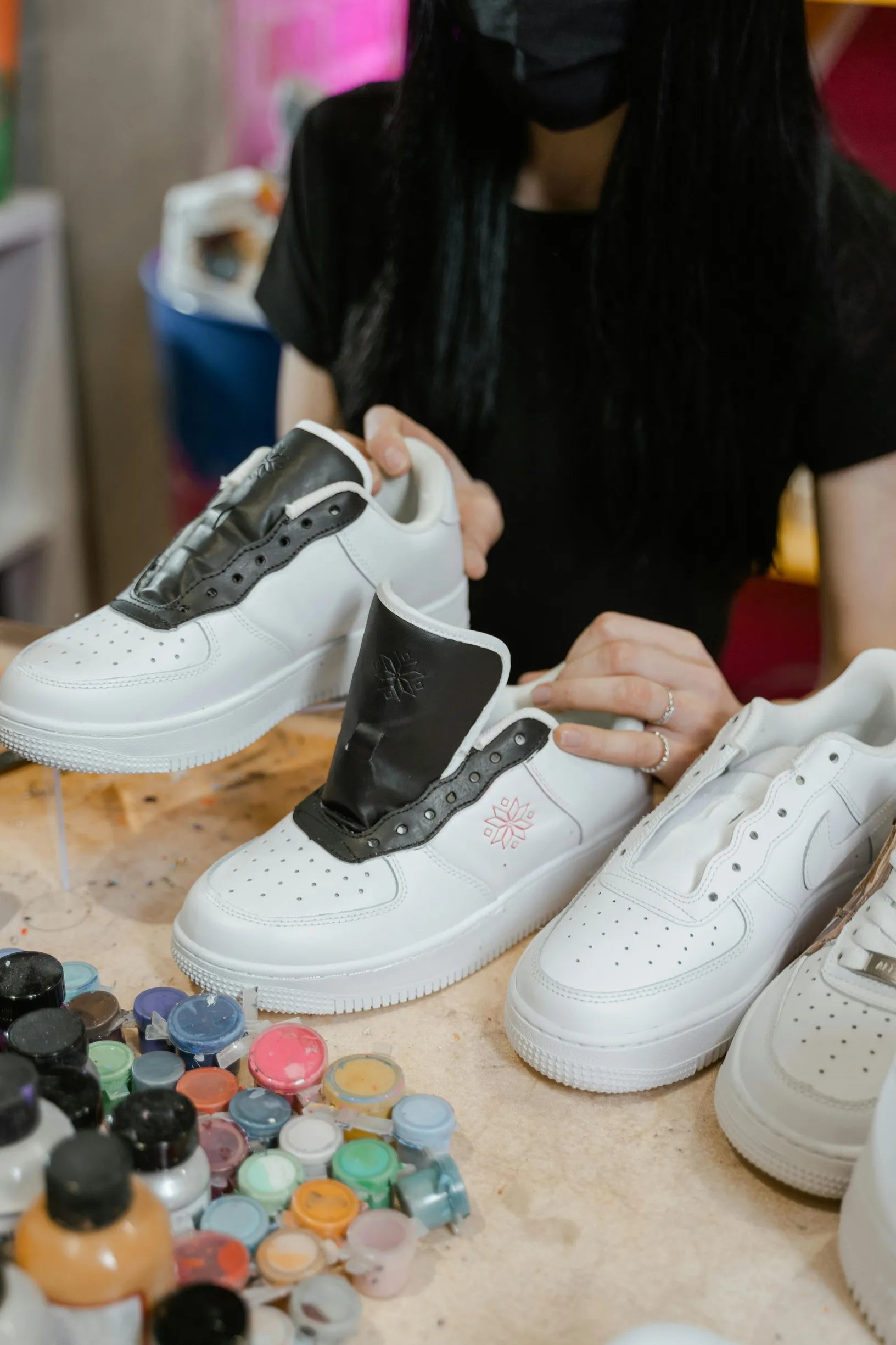
Begin repairs on trainers or sneakers by removing laces and insoles, brushing out grit and washing uppers with a mild detergent. Stuff each shoe with paper to retain its shape while it air dries, and lightly roughen bonding surfaces to improve adhesive grip. For simple fixes that significantly extend wearable life, reattach or reinforce soles with a strong adhesive plus a few hand stitches, patch worn toes and heels with reclaimed fabric or vegan material offcuts, and replace or layer insoles with recycled foam. These preparation and repair routines reduce failure rates during fixes and provide a clean, stable canvas for further mending or creative customisation.
When trainers are beyond wearable repair, salvage components and repurpose them around the home. Add a waterproof liner and a drainage layer to make a planter, stuff and weight them to create doorstops, or cut panels to sew into pouches and cushions. Use simple, step-by-step layouts so you can judge material potential before making any cuts. Boost appeal with low-tech treatments such as fabric paint, embroidery, appliqué patches or dye, then finish with a water-based sealant. Always test colours and adhesives on a hidden area first. Mobilise community knowledge by organising repair clinics, swap meets and skill-share sessions to teach resoling, patching and decorative techniques. Compile repair templates, tool lists and before-and-after case studies to lower the learning curve. Scaling these activities rescues more pairs and spreads practical skills across the high street and beyond.
Clean and prep trainers with an eco-friendly care kit

9. Partner with local repair experts and high street retailers to extend product life
Create a vetted local repair network that brings together high-street cobblers, shoe technicians and retailers. Record each contact's specialities and the materials they accept, and include customer feedback so readers can select dependable partners. Work with those professionals to host repair clinics and run drop-in sessions where technicians demonstrate resoling, stitch repairs and reattachment techniques. Use clear before and after photos to show how simple interventions can extend the usable life of trainers and high tops. Collect bookings for follow-up work at clinics to steer items back to repair rather than disposal. Equip front-of-house staff to triage incoming trainers, label items with required actions and parts, and pass concise job notes to repair partners to reduce repeat visits and speed turnaround. Prioritise transparency and accessibility so repair becomes the default choice for maintaining footwear, supporting a culture of reuse and longevity.
Set up parts-pooling and take-back schemes so retailers catalogue commonly salvaged components from returned or unsold trainers, make that inventory available to repair specialists, and channel reusable parts back into repairs to keep more pairs in circulation. Track repair outcomes by recording the number of trainers repaired, recurring fault patterns and the most-used replacement parts, then publish clear summaries to demonstrate impact. Use these insights to target community repair efforts where they avoid the most waste, and to refine triage and stock rules.
Keep trainers repair-ready with a gentle, eco cleaning kit.

10. Track impact to amplify community momentum and spark collective action
Set a handful of measurable impact metrics, for example: pairs diverted from landfill, condition at intake, repairs completed and volunteer hours. Assign a simple ID to each pair of trainers to link intake, repair and final outcome, so you can calculate success rates with confidence. Build straightforward volunteer workflows around a single intake form. Photograph each pair before and after repair, label items with the ID, and capture the donor postcode area to map neighbourhood participation without collecting sensitive data. These steps convert raw counts into meaningful indicators such as diversion percentage, estimated lifespans and weight diverted, and make outcomes auditable.
Turn data into visible evidence by publishing leaderboards, neighbourhood maps and before-and-after galleries so the community can see progress and pinpoint where outreach should change. Create simple feedback loops: ask donors and recipients two quick questions after handover, collect short quotes and photos to humanise statistics, and run A/B tests of different collection messages to see which increase usable donations. Compare collection and repair rates across partners such as repair cafés, schools and high street drop-off points to identify the most effective channels. Share those findings with partners, scale what works and grow community momentum.
These ten practical actions show how communities can keep trainers wearable for longer and divert large numbers of pairs from landfill. They bring together everyday care, straightforward repairs, repair clinics, take-back schemes, swap meets, upcycling and community partnerships to create clear, measurable reuse and recycling pathways.
Use checklists, run hands-on workshops and log intake and outcomes so minor repairs translate into measurable community impact. Start with one local action, track each change and watch repair rates climb, more trainers stay in circulation and less material is sent to landfill.