
Do Bespoke Trainers Really Close the Loop on Footwear Waste?
Vast quantities of trainers are discarded, clogging landfill and leaving recoverable materials unused. The question is simple: can bespoke, made-to-measure trainers produced to order and designed for repair actually stem this tide of waste?
We quantify the scale and drivers of trainers and sneaker waste, evaluate whether made-to-order models maximise material efficiency, and assess how prioritising craftsmanship, repairability and end-of-life strategies can extend product life. This evidence-led analysis highlights where bespoke approaches succeed, where they fall short, and sets out practical steps that can genuinely close the loop.

How big is footwear waste and what drives it?
Convert production and sales volumes into mass by multiplying pairs sold (for example trainers or sneakers) by a representative average weight per pair to produce tonnes. Place that total alongside municipal and textile waste streams to show relative magnitude. Break the total down by material and stage: quantify proportions of rubber, foam, textiles, leather and adhesives, and map waste flows from manufacturing offcuts, retail returns, consumer discards and end of life using simple waste audits or a Sankey diagram. Identify principal drivers, supported by evidence, by analysing durability and repairability, design complexity, return and reject rates from retailers, consumption frequency driven by fashion cycles, and consumer disposal behaviour from surveys. Translate those findings into clear KPIs such as average useful life, return percentage and defect rate.
Track circularity with clear, actionable metrics: collection rate, recycling rate, proportion of material reclaimed for reuse, rate of downcycling and greenhouse gas intensity per pair. Reconcile inputs and outputs through mass balance accounting, using production records, waste audits and take-back schemes as primary data sources. Prioritise interventions that alter material flows, such as design for disassembly, standardised material streams, take-back programmes linked to sales, and scaling mechanical or chemical recycling to increase reclaimed material. Use scenario modelling to forecast waste diverted, tonnes reclaimed and reductions in carbon and landfill, and run sensitivity analyses so decision makers can compare levers and set realistic targets.
Choose certified recycled-content basics to cut plastic waste.

Adopt made-to-order production to maximise material efficiency and reduce waste
Producing shoes only after a customer commits cuts unsold stock, reduces scrap from cutting and diverts less material to landfill. Comparative lifecycle studies and industry reports generally show that running factories to demand lowers upstream waste. Designers can amplify those benefits by using digital pattern nesting, optimising size grading and favouring modular or single-piece upper constructions for trainers, sneakers and high tops. Limiting configurable elements preserves personalisation without adding complexity. Together, these choices shrink offcuts and make production more predictable.
Prioritise mono-material constructions and avoid bonded multi-layer laminates that resist separation. Clearly label materials and design components so they can be disassembled easily, improving repairability and recycling at end of life. Reduce remakes and returns by using accurate virtual-fit tools, straightforward measurement guides and realistic fulfilment expectations, and by offering a small, curated set of custom options. Track what matters: waste per pair, return and remake rates, and materials reclaimed, and build take-back or remanufacture pathways to recover value. Run small pilots and apply life cycle assessment to compare made to order outcomes with traditional production so stakeholders can judge benefits and refine circular workflows.
Choose certified recycled-fibre layers to reduce textile waste.

Prioritise craftsmanship to extend product lifespan, enable repair and support circularity
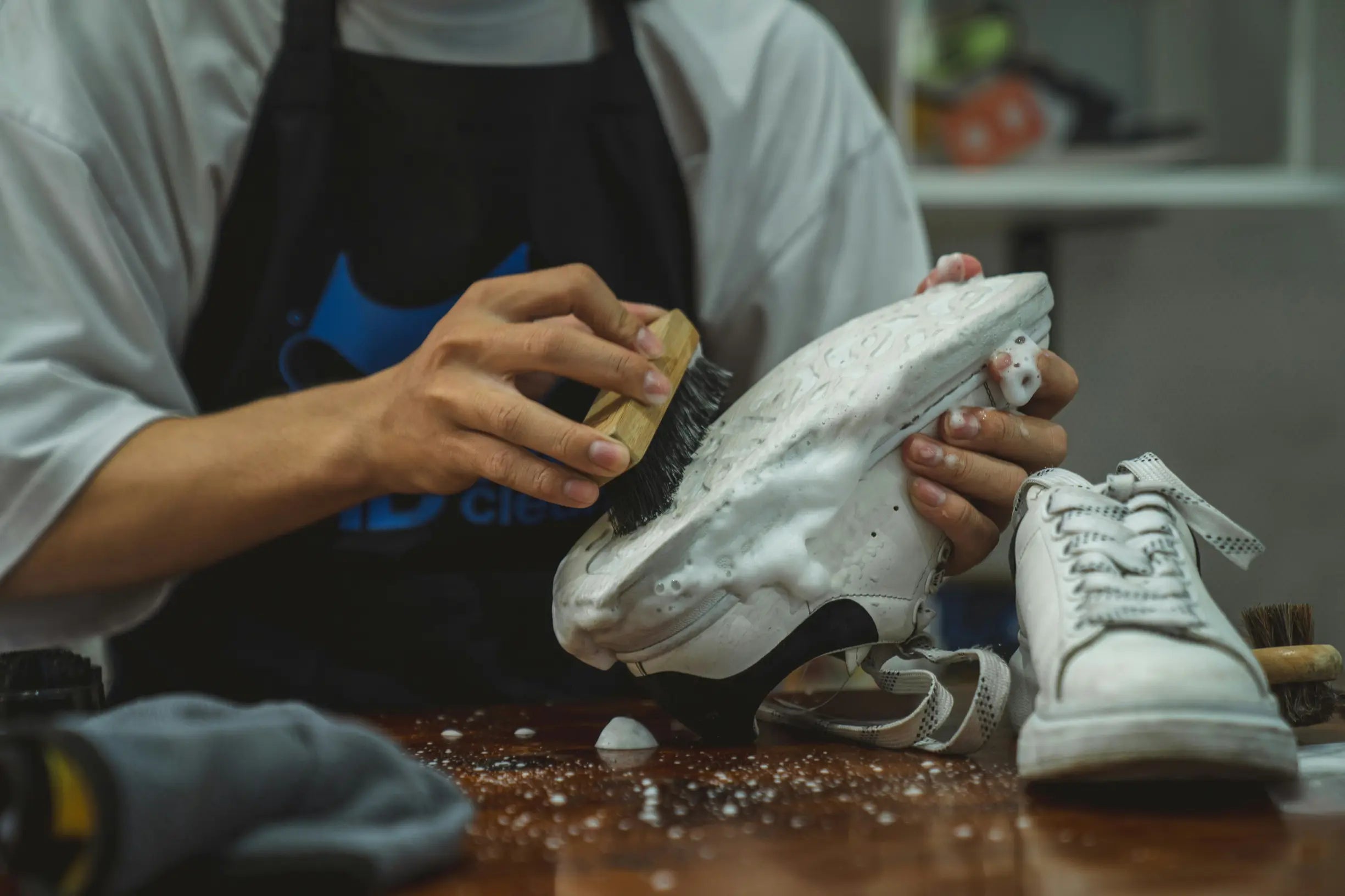
Durable, repair-friendly construction favours stitched attachments over permanent adhesives, reinforces stress points with double stitching, and designs soles as replaceable modules so repairers can swap worn units rather than discard whole trainers. We aim to standardise components where possible to support easier repairs. Clear repair documentation and illustrated parts lists let customers or independent repairers diagnose common faults, order exact spares, and complete typical repairs without specialist tooling.
Using mono-material panels, reversible adhesives and clear material labelling improves mechanical recycling yields, reduces contamination and speeds up component recovery. A robust take-back and triage system diverts returned trainers into reuse, repair, remanufacture and material recovery streams, keeping components in circulation. Tracking diversion rates and component recovery reveals how close a product is to a truly closed-loop outcome and exposes bottlenecks in repair and recycling flows. Paired with standardised parts and clear repair guides, these measures enable independent repairers and remanufacturers to reuse modules, recover materials and close material loops more effectively.
Producing trainers to order cuts unsold stock and material offcuts, while modular, mono-material construction with clear labelling keeps inputs recoverable. Those design choices only deliver real gains when paired with repairable joins, standard spare parts, accurate fit tools and robust take-back pathways that prevent contamination and remanufacturing loss.
Track progress with clear, measurable KPIs that matter: collection and recycling rates, return and remake percentages, component recovery, and greenhouse gas intensity per pair. These metrics reveal bottlenecks and make it simple to compare interventions. Start with targeted pilots that measure waste per pair and lifecycle impacts, then scale approaches that increase repair and recovery rates and help organisations build a practical route to closing the loop on trainers, sneakers and other footwear waste.