
5 Repair, Protection and Storage Tips to Extend the Life of Vegan Leather Trainers
Love the look of vegan leather trainers but worry about wear, scuffs and the hidden risk of microplastic shedding? Poor care shortens their lifespan and increases microplastic pollution in waterways and the textile waste stream.
Know your trainers: identify the materials, clean gently, repair scuffs, protect finishes and store or dispose of them responsibly. These practical care tips will keep trainers looking their best for longer and help reduce microplastic shedding at every stage of use and care.

1. How to assess microplastic risks in vegan leather trainers
Vegan leather covers a range of constructions used in sneakers, trainers and high tops, from polyurethane and PVC to recycled plastics and plant-based skins. Durability and microplastic risk depend less on the vegan label and more on the finish, backing and adhesives used. Many plant-based leathers have a plastic backing or coating that prevents biodegradation, so a product that looks natural can still contain layered plastics. Inspect cut edges, seams and the underside to spot layered plastics. Retailers or tags may provide a material breakdown, but disclosures are often limited; check product descriptions or contact the seller for full details rather than relying on the word "vegan" alone.
Synthetics shed tiny particles through abrasion, flexing and washing. Routine care can limit that fragmentation: remove grit before cleaning and avoid machine washing. For everyday cleaning, use a soft brush and a damp cloth, then air-dry away from direct sunlight. If you plan to apply a protective treatment, test it first on a hidden patch. Repair small tears promptly, because UV, heat and harsh chemicals make coatings brittle and accelerate breakdown. At the end of their life most municipal recycling schemes will not accept synthetic leather, so prioritise repair, resale or specialist take-back schemes, and pass clear material details to whoever receives the trainers.
Clean and protect vegan uppers with gentle, eco-friendly care.

2. How to gently clean your trainers after every wear
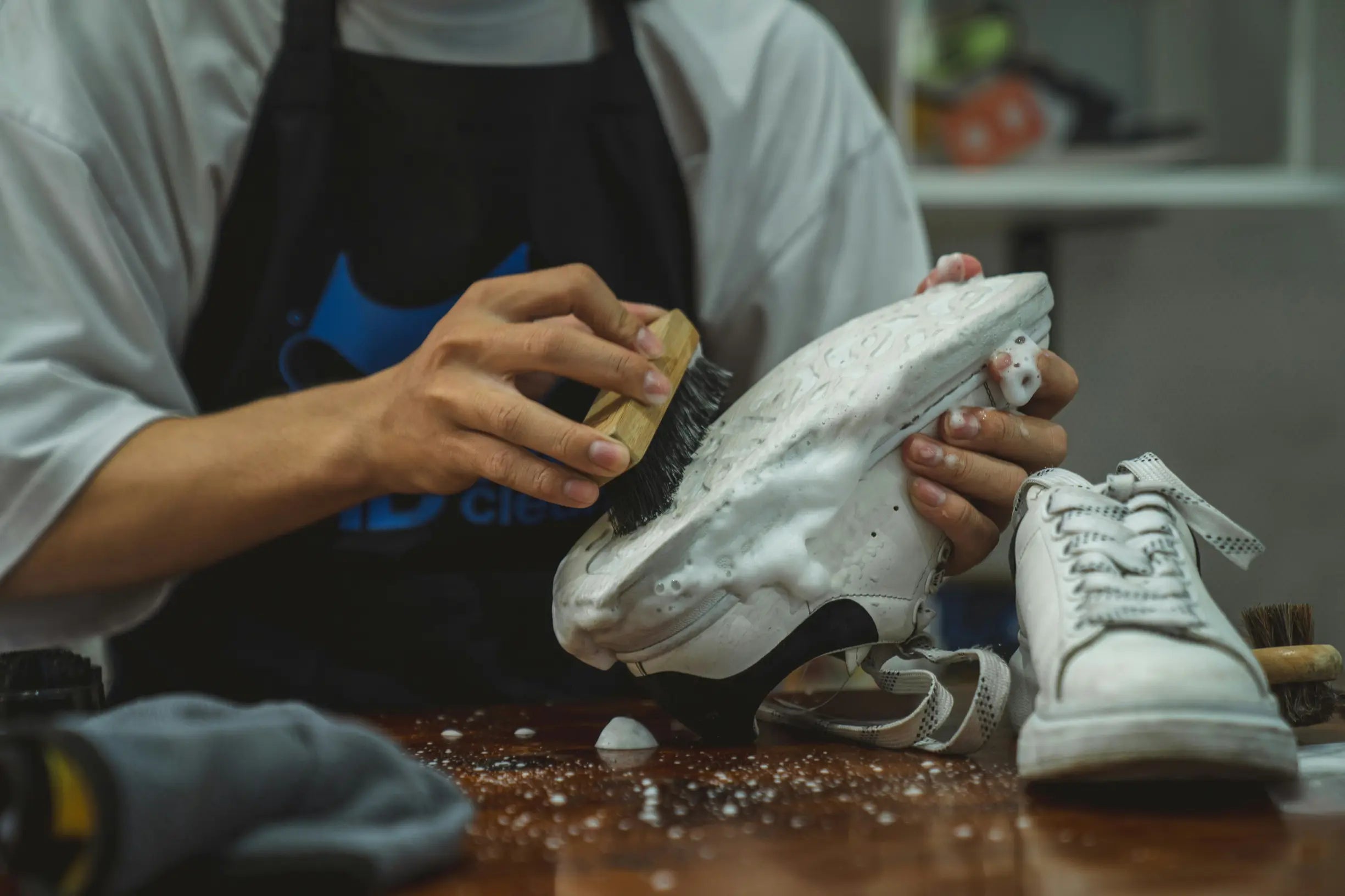
To care for trainers, start by brushing away grit and loose dirt with a soft-bristled brush or a dry microfibre cloth to remove particles that could abrade the upper and cause microcracks. Wipe gently with a barely damp microfibre cloth and, if needed, add a drop of mild, pH-neutral soap. Work in small, circular motions and rinse the cloth frequently so you blot rather than scrub, avoiding any action that might lift the finish. Spot-treat stains with a cotton bud or a soft toothbrush for seams and creases. For oil-based marks, use a diluted, pH-neutral cleaner and make several gentle passes rather than increasing pressure. Test any cleaner on an inconspicuous area first to check compatibility with the coating.
After cleaning, blot away excess moisture and stuff the trainers with scrunched paper or a shoe tree to retain their shape. Air them in a well ventilated spot, out of direct heat or sunlight to prevent warping and accelerated cracking. Remove insoles and wash or wipe them separately. Launder or replace laces, and freshen interiors with a light dusting of bicarbonate of soda or a dedicated deodoriser to keep liners dry. Keeping the interior dry reduces odour and the risk of mould. Small, regular care will preserve the fit and appearance of vegan leather trainers.
Refresh trainers gently with soft brush, cloth and cleaner.

3. Repair scuffs, torn seams and worn soles
Begin with a damage triage. Inspect the uppers of your trainers for surface scuffs, cracks, seam openings and any sole separation. Gently flex the trainer to reveal hidden splits, and press along seams to check for interior detachment. Measure the gap: if the sole lifts more than 5 mm or peeling extends across more than a third of the trainer, plan for a more substantial repair or seek professional attention. Small issues often respond to spot repairs; larger separations indicate structural failure and a greater risk of water ingress. Record your findings and prioritise fixes that prevent further material loss.
Simple repairs keep trainers in use longer and reduce waste. For scuffs, wipe the area with a soft cloth and mild soap, dry thoroughly, and always test a small hidden patch first. Work in thin layers of a specialist faux-leather cream or acrylic repair paint matched to the colour, blending and buffing between coats to reduce the risk of future cracking. To mend seam tears neatly, push the torn edges together, apply a little fabric adhesive to stabilise, then stitch from the inside with waxed polyester thread using small backstitches or a ladder stitch, and secure the knot with a dab of adhesive. To reattach a lifted sole, roughen both surfaces with fine abrasive paper, apply a flexible adhesive suitable for synthetic materials, clamp or press firmly while it sets, and check the bond by flexing. For extensive tread wear or structural sole failure, consider resoling or fitting a protective outer sole. Pack a compact repair kit with a needle, waxed thread, fine abrasive paper, adhesive and a soft cloth for immediate fixes.
Choose a rugged layer that’s built to last.

4. Protect your trainers with safe cleaning and care routines
Use a water-repellent formulated for synthetic leather and always patch-test on an unseen area to check for any colour change or lifting of the finish before treating the whole trainer. Apply thin, even layers and stop once water beads on the surface, which shows the protective barrier is working. Deal with spills promptly: blot liquids, brush away dried dirt with a soft brush, then wipe with a cloth dampened in a diluted, neutral pH soap solution and rinse with a second damp cloth. Reshape the trainers and allow them to dry naturally, away from direct sunlight or heat sources to prevent warping and brittleness.
Avoid solvents such as acetone or strong alcohol-based cleaners. Do not accelerate drying with a hairdryer or radiator, as heat weakens synthetic finishes and raises the risk of cracking. Preserve structure and hygiene by inserting breathable shoe trees or stuffing trainers with acid-free tissue. Rotate pairs so moisture can evaporate between wears, and remove insoles to air separately to reduce odour and bacterial build-up. Protect high-wear areas with clear toe and heel guards or replaceable sole protectors, and add washable fabric tongue guards where rubbing occurs. Reapply surface treatments when water no longer beads or when colour and finish begin to change.
Clean and protect trainers with a gentle, eco-friendly kit.

5. Store, wash and dispose clothing to limit microplastic shedding
Store vegan leather trainers in breathable cotton bags or on open shelving rather than in sealed plastic, since trapped moisture and poor airflow accelerate material breakdown and increase microplastic shedding. Friction from rubbing and repeated temperature changes weakens the synthetic surface, causing tiny particles to flake off during wear or handling. When drying, air-dry trainers in a well-ventilated space away from direct heat or radiators to preserve flexibility and reduce brittleness that leads to more shedding.
Minimise microplastic pollution by washing trainers in cold water on a gentle cycle and enclosing them in a mesh laundry bag. Avoid fabric softeners, which can break down synthetic fibres; mechanical action during washing is a major source of microplastic release, and a mesh bag helps trap loosened particles before they reach wastewater. When trainers are beyond repair, use textile recycling programmes or manufacturer take-back schemes to keep materials out of landfill, where further breakdown would generate more microplastics.
Care for vegan leather trainers with gentle cleaning, prompt repairs and appropriate protective treatments to preserve appearance and reduce the abrasion that sheds microplastics. Inspect construction, tackle scuffs, loose seams and worn soles early, and adopt safe drying and storage habits to prevent small issues becoming structural failures.
Follow the five steps: understand, clean, repair, protect and store. Use them to build a care routine tailored to your trainers' materials. Doing so keeps your trainers serviceable for longer, reduces microplastic shedding and makes end-of-life choices such as repair, resale or specialist recycling more effective.