

3 Ways to Reduce Microplastics from Synthetic Vegan Leather: Alternatives, Care, and Disposal
Synthetic vegan leather sheds microplastic fibres into waterways and soils during everyday wear and laundering, contributing to pollution and potentially entering food chains. If you choose vegan leather for animal welfare or for its style, that hidden shedding can feel like an unexpected and uncomfortable trade-off.
This guide explains how microfibres are released, which materials and designs shed least, and practical ways to care for, repair and dispose of items to limit further release. Follow three clear approaches: understand how microfibres form and shed; choose lower-shedding materials and smarter designs for garments and trainers and high tops; and maintain items through careful cleaning, timely repair and responsible disposal to reduce microplastic pollution while keeping the benefits of synthetic alternatives.

1. Understand how synthetic vegan leather releases microplastics into the environment
Most synthetic vegan leathers are a polymer coating bonded to a textile backing. Everyday stresses such as abrasion, repeated flexing, sunlight exposure, heat and poor adhesion can make the coating flake or cause the backing to shed microfibres. This is especially relevant for trainers and high tops, where flexing and wear are frequent. Different constructions behave differently in laboratory wear tests. PVC-coated fabrics tend to crack and produce brittle fragments, while PU and thermoplastic coatings abrade into short fibres. Synthetic backings generally release more microfibre than natural-fibre backings. Simple in-store or at-home checks can give a good indication of likely shedding. Inspect cut edges and seams for exposed fibres, gently rub the surface with a damp white cloth or tissue to check for residue, and review labels or visible construction for sealed edges, laminated coatings and the type of backing used. These observations offer practical evidence of how an item is made and how it will perform under everyday use.
Machine washing, tumble drying, repeated high-friction contact and prolonged sunlight accelerate fragmentation and increase the release of microplastics. To reduce shedding, favour spot cleaning, air drying and avoiding abrasive surfaces. When items reach the end of their life, mechanical shredding in recycling, uncontrolled fragmentation in landfill and residues from incineration can generate secondary microplastics that disperse more widely in the environment. Choosing repair, reuse and take-back or collection schemes slows this release by extending an item's service life or enabling controlled, managed processing.

2. Choose low-shedding materials and smarter designs for longer-lasting trainers
When choosing trainers or other fashion items, favour smooth, tightly sealed coatings over brushed, suede or piled surfaces, because exposed fibres shed microfibres during rubbing and cleaning. Prioritise robust construction and bonded layers. Opt for multi-layer designs where a hard-wearing top coat resists abrasion and a tightly bonded backing prevents fibre loss, and ask manufacturers for abrasion-resistance or fibre-loss data when available. Do quick shedding checks before you buy by rubbing a dark cloth across the surface, pressing adhesive tape and lifting, or flexing the material. Visible lint, fuzz or residue indicates higher shedding potential.
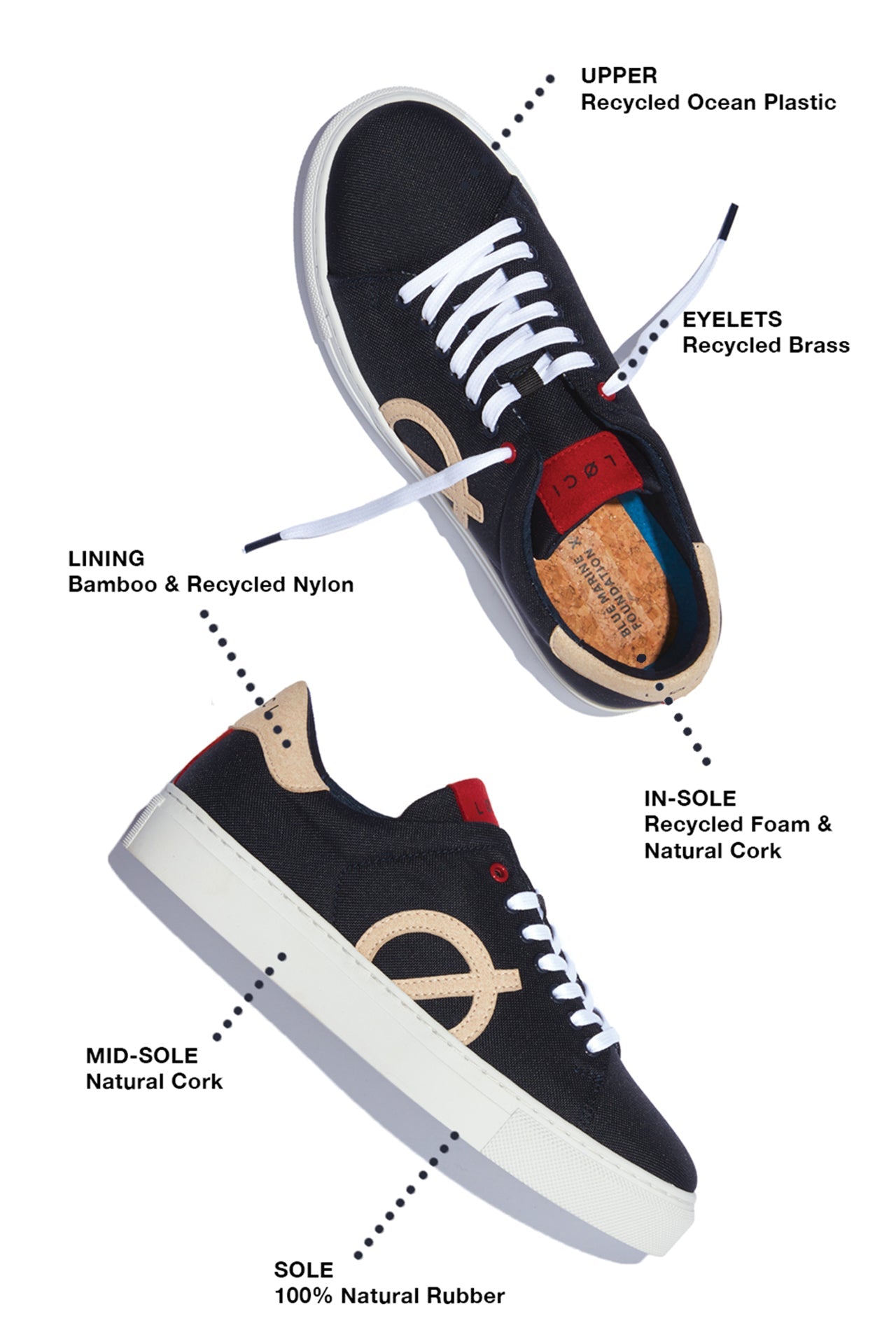
Opt for design details that cut friction and abrasion points, such as single-piece panels, concealed seams, wider straps and smooth hardware. These details reduce the surface stress that generates microplastics and microfibres. Where possible, favour low-plastic, continuous-surface materials — for example cork, dense waxed canvas, plant-based leathers and fabrics finished with a thin polymer film — rather than constructions made from dispersed synthetic fibres. Continuous surfaces tend to release fewer synthetic micro-residues over their lifetime, lowering long-term shedding risk. Combining these material choices with smarter detailing gives the best chance of reducing microfibre release across a product's life, whether you are designing trainers, high tops or other fashion items.

3. Care for, repair and dispose of trainers to reduce microplastic release
Adopt a low-shear cleaning routine for trainers, outerwear and accessories made from synthetic materials. Wipe with a soft cloth, use a mild pH-neutral detergent when needed, wash on a gentle cycle or hand-wash in cool water, avoid tumble drying and always let items air dry. Mechanical agitation and heat increase microfibre release, so use a mesh laundry bag for delicate pieces and consider an in-line washing machine filter to capture fibres before they enter wastewater. When you cut, mend or clean synthetic leather, collect trimmings and lint with a fine mesh, by sedimentation or with a sticky roller, then place solids in general refuse rather than down the sink. These simple habits reduce microfibre pollution and help protect waterways.
Mend small tears early; choose mechanical repairs like stitching or internal patches. Intact surfaces shed far fewer microfibres and simple mending stretches an item’s usable life. Reduce everyday abrasion by storing items flat or hanging to avoid fold stress, avoiding overfilling bags, and smoothing rough seams or edges. Do quick checks to catch early wear on trainers, high tops, clothing and accessories. At the end of life, separate components and remove metal fittings, donate or repurpose pieces in good condition, and contact local textile recycling centres or take-back schemes. Diverting materials from landfill or incineration helps keep bulk polymers and microplastics out of the environment.
Choosing low-shedding materials, smarter designs and careful care, including cleaning, repair and responsible disposal, can significantly reduce microplastic release from synthetic vegan leather used in trainers and other fashion items. Laboratory and field studies show sealed coatings and bonded backings shed fewer fragments, while mechanical agitation and heat increase microfibre loss.
Make simple checks before you buy, favour low-shear care such as gentle cycles and air drying, and repair or repurpose items to keep fibres contained and extend their lifespan. Small choices at purchase, during use and at end of life accumulate into measurably lower leakage of microplastics, so favour durable construction and thoughtful disposal to reduce your contribution to microplastic pollution.