
5 Signs Your Trainers Are Truly Vegan, Not Just Labelled?
A vegan label does not always mean zero animal-derived materials. Hidden components such as adhesives, leather trims and finishing agents can tell a different story. How can you spot when a pair is genuinely vegan rather than greenwash wrapped in eco-friendly language?
This guide sets out five clear checks: materials and construction, credible certifications, supply chain transparency, durability and repairability, and end-of-life impact. Use these practical checks, whether on the high street or online, to spot genuinely animal-free trainers rather than clever marketing, and make choices that align with your values.

1. How to spot genuine vegan trainers and avoid greenwashing
Know what to ask. Truly vegan trainers contain no animal-derived materials, so check every component for leather, suede, wool, silk, down and animal-based glues or dyes. Inspect linings, insoles, heel counters and adhesives, since these are common hiding places. Be wary of vague claims such as leather-free, natural or plant-based without a full materials breakdown. Insist on an explicit materials list with composition percentages and declarations that cover adhesives, dye baths and finishes. Treat third-party certification as supporting evidence only. Check what a certificate actually covers, whether it includes supply chain traceability, and whether the certifier is accredited and transparent about its scope.
Demand transparency: ask retailers for the country of manufacture along with supplier and factory details, and request audit reports or supplier declarations. Transparency about raw-material origins and factory practices separates meaningful claims from spin. At point of sale, carry out non-destructive checks: feel the texture and look for consistent grain, check for any animal or strong chemical odour, and inspect stitching and glued edges to help identify the substrate. Request material safety data sheets or technical data sheets to corroborate your observations, and compare those documents with the product label. Combine documentary evidence, supply chain information and physical inspection to judge whether a trainer or sneaker is genuinely vegan.
Opt for an ethically produced tee with disclosed materials.

2. Check materials and construction to confirm they are vegan
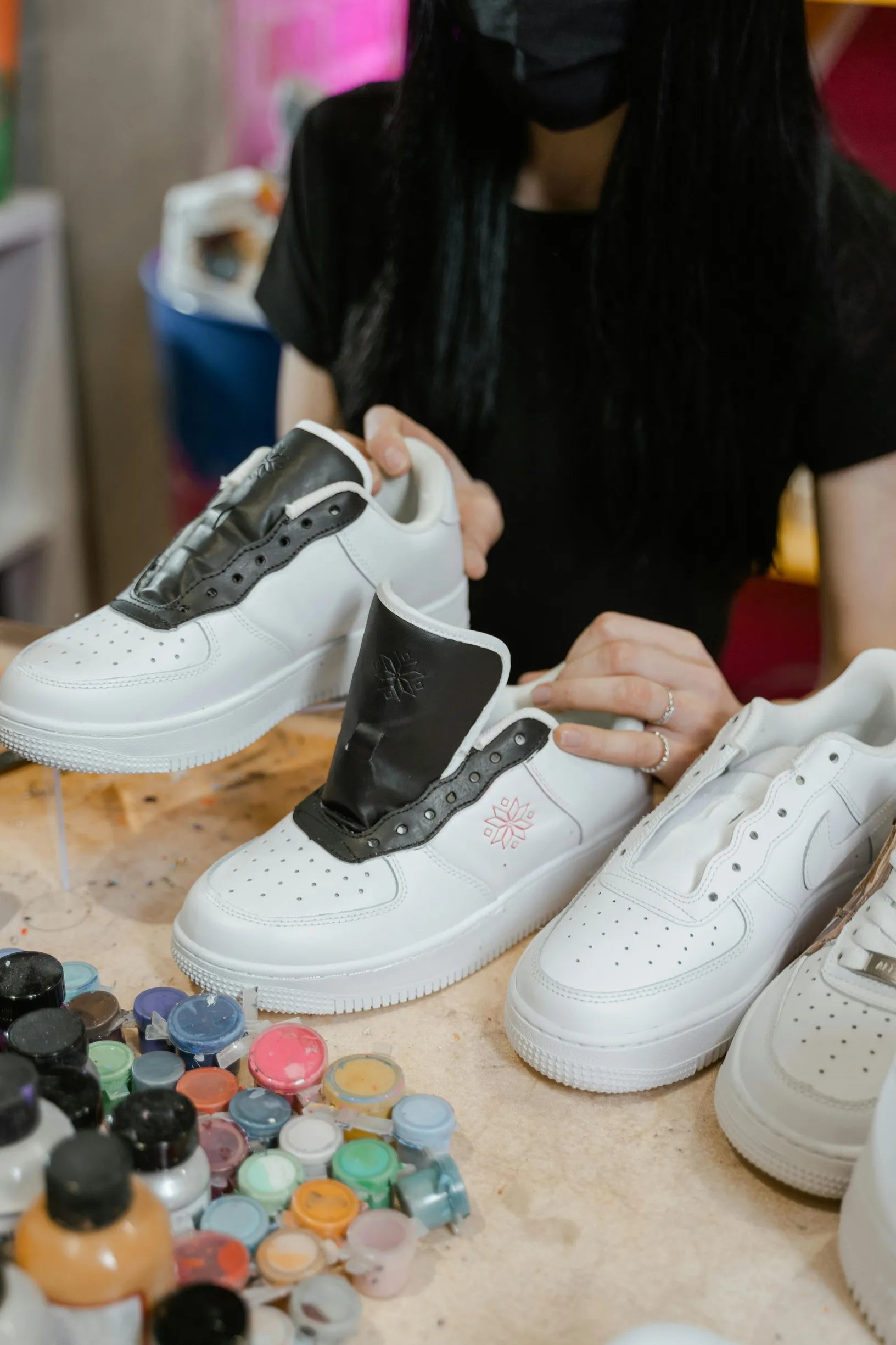
Start by checking all inner labels and stamped markings. Peel back the tongue tag and look beneath removable insoles for declarations that state the upper, lining or footbed are made from man-made materials, PU (polyurethane) or microfibre, and avoid any part labelled leather, suede or hide. Remove insoles where possible and feel the underside for a fibrous suede or leather backing, and inspect the collar, heel lining and tongue backing because manufacturers often use real leather for internal parts. If labels are ambiguous, request a full materials list from the retailer or supplier.
Inspect cut edges, seams and the welt. Real hide shows fibrous, layered edges and irregular grain; synthetics have smooth, sealed cuts and a uniform backing. Run a fingernail along a cut edge or take a close-up photo with your phone to reveal any concealed leather scraps. Zoom in on grain, pores and texture. Inconsistent pore placement, natural scars and variable creasing point to animal hide, whereas perfectly repeating pores indicate embossed leather or a coated fabric. Check trims, eyelet reinforcements and glued areas, since leather can be hidden under binding or inside heel cups. When in doubt, ask for clarification about adhesives and backing materials. Textile backings, polyester tapes or welded seams rather than stitched leather edges are signs of synthetic construction.
Wear cushioned socks for accurate fit and comfort.

3. Confirm labels with recognised certifications and verifiable evidence
Start by checking for recognised third-party vegan certification logos. Verify the licence number or product listing on the certifier's website to ensure the claim covers that trainer model and its production batches. Request material declarations or technical datasheets that itemise components in uppers, linings, soles, adhesives, dyes and finishes, and check those lists for animal-derived terms such as shellac, casein, lanolin, collagen and bone char. Ask the manufacturer or retailer for supply-chain traceability or a written statement on raw material origins, because a clear chain from raw material to finished trainer provides stronger evidence than a generic vegan label.
Seek independent laboratory test results or factory audit reports that screen for animal proteins and contamination. Make sure the documents reference the product code or batch so they explicitly cover the trainers you plan to buy. Ask customer service precise questions about adhesives, dye sources and factory cross-contamination controls, and keep copies of all replies. Favour documented, verifiable answers over vague or evasive responses. Cross-check certificates, datasheets, test results and correspondence to build a consistent chain of evidence before you accept a vegan label.
Choose ethically produced basics with verified certifications.

4. Insist on transparency across the supply chain and ethical manufacturing practices
Don’t accept a vegan claim at face value. Ask for a materials provenance map that lists every component, its country of origin and the proportion traceable to named suppliers or farms. Use batch numbers or supplier names to verify links between finished trainers and their raw inputs. Request third-party social, environmental and animal-free audit reports, plus signed supplier attestations that confirm no animal-derived inputs and no animal testing at any stage. Insist on factory disclosure, photographic or video tours, and clear policies on wages, working hours and grievance mechanisms so you can assess labour standards. When brands supply these records, you get verifiable evidence to scrutinise rather than a vague marketing claim.
Ask suppliers for material safety data sheets and technical specifications for coatings and adhesives, plus clear descriptions of tanning, dyeing and gluing processes to confirm there are no animal-derived inputs and to identify any environmentally harmful chemistries. Request traceability tools such as QR codes, batch tracking or supply-chain maps, and review written policies on subcontracting and remediation of non-compliance so you can follow a product back to source and see how issues are resolved. Accessible technical documents and formal remediation procedures give you the evidence needed to hold manufacturers to account and to verify that a trainer labelled as vegan contains no hidden animal inputs or unethical practices.
Choose ethically produced basics with verified supply-chain documentation.

5. Evaluate trainer durability, repairability and end-of-life environmental impact
Do a quick physical check on trainers or sneakers. Bend the shoe at the forefoot to test flex, tug gently at seams and eyelets, and scrutinise the sole-to-upper joins; stitched joins are preferable to surface glue. Stitch-attached or welted construction, consistent stitch density and neat edge finishes point to footwear that will tolerate repair and heavy wear. Also look for removable, standardised parts such as cushioned insoles that lift out easily, replaceable laces, and modular tongues or heel counters, since visibly bolted, stitched or uniformly shaped components make common failures simpler to fix.
Choose trainers or sneakers with single-material panels or clearly labelled components so parts can be sorted for recycling. Be wary of uppers made from multiple bonded layers or foam-sandwich constructions that cannot be separated, because a biodegradable upper joined to a non-separable synthetic sole still becomes waste. Prioritise mono-material designs, detachable soles, or makers that publish repair guides, offer spare parts, or operate take-back programmes. Look for clear guidance on recycling routes or disassembly methods to assess a product's true end-of-life impact.
True vegan trainers contain no animal-derived inputs in any part of their construction, including materials, adhesives and finishes. Judging a pair by the label alone can be misleading. Instead, seek verifiable evidence: inspect how the trainers are made and which materials are used, review detailed labels and technical datasheets, and confirm independent certification and clear traceability.
When evaluating a pair of trainers or sneakers, use five checks. Inspect materials and construction. Verify labels and test results. Confirm recognised certifications. Demand clear supply chain information. Assess repairability and end-of-life impact. This approach turns vague claims into verifiable facts, helps you align buying decisions with your values and reduces the risk of unknowingly supporting animal-derived materials or unethical manufacturing.