

How to Wear Vegan Trainers to a Smart-Casual Event Without Looking Under-Dressed
Vegan trainers can look entirely at home at a smart-casual event. The key distinction is whether the pair looks streamlined or athletic. A clean, considered pair can support an outfit for a gallery visit, restaurant lunch, informal work gathering, daytime celebration or relaxed drinks, provided the rest of the look respects the setting.
Start with the invitation rather than the shoes. Smart-casual conventions vary by venue, host, profession, city and event, so use the time of day, location and likely company as clues. Your aim is to look deliberate, not as though you have arrived straight from the gym or a commute. The following method will help you judge your existing pair and build around it, without buying a separate shoe for every occasion.

Read the dress code before you choose the shoes
“Smart casual” is a range, not a universal rule. A daytime gallery visit or relaxed lunch may welcome pared-back trainers, while a formal restaurant, senior work occasion or venue with an explicit “no trainers” policy may call for loafers, sleek boots or another dressier option. If the invitation is vague, check the venue, ask the host discreetly, or look at how the event is presented rather than relying on the label alone.
Consider four cues: the venue, the time, the wording and the host. A polished trainer can work with a blazer at a creative workplace, but the same pair may feel too relaxed at an evening event where guests are expected to wear tailored separates. When in doubt, it is more respectful to dress slightly more formally than to hope casual footwear will pass unnoticed.


Choose a pair that reads polished, not sporty
Look at the pair as a whole. A low or moderate profile, tidy sole, restrained panelling, smooth or matte finish and minimal branding generally sit more comfortably with tailored clothing than a highly technical, mesh-heavy or visibly performance-led design. This is about visual language, not the fact that the shoes are vegan: vegan describes the material choice, not an automatic level of formality, comfort or durability.
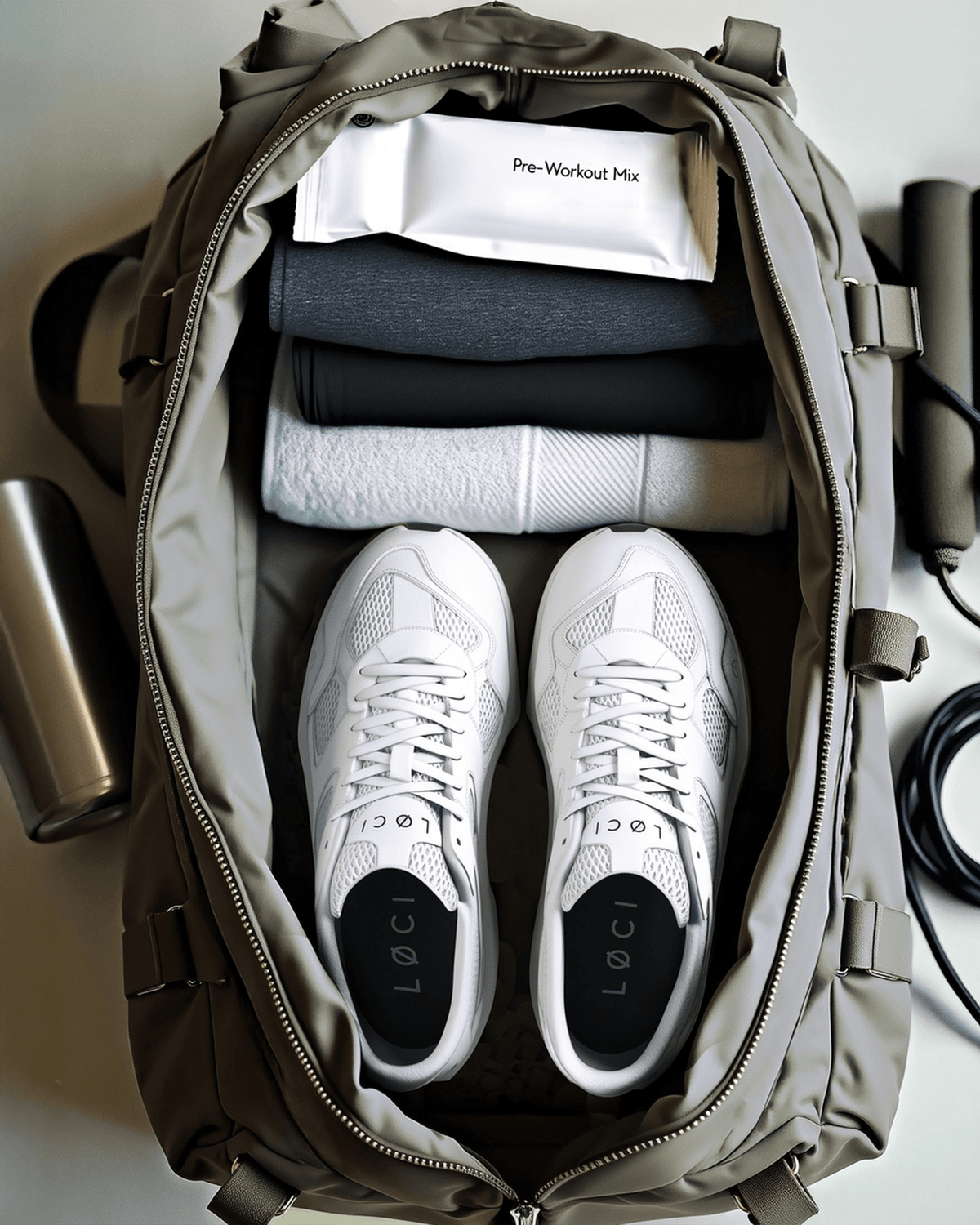
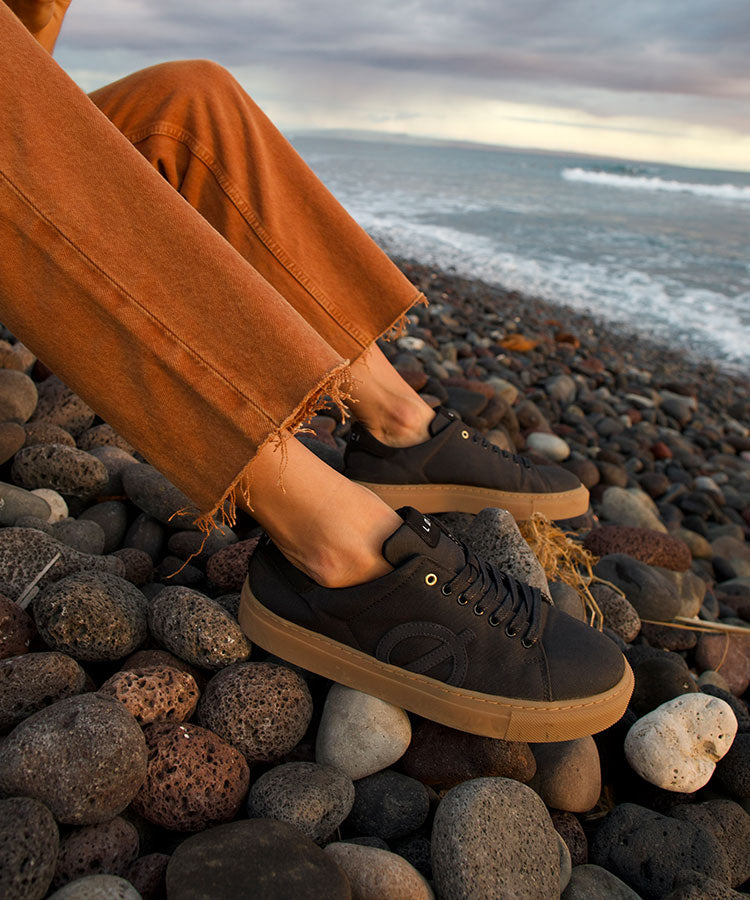
A classic tennis-inspired, understated direction such as LØCI’s ØRIGIN Black/White can be a useful style reference because its visual cues are simple enough to move between denim and tailoring. It is an example of a silhouette, while your existing pair may work just as well if its shape and condition suit the occasion.
If your only pair is chunky, brightly coloured, heavily textured or marked by technical details, do not force it into a formal setting. You can reduce the contrast by wearing it with relaxed tailoring, dark denim, a long structured coat or a tonal outfit. If the trainers still dominate the look, choose them for a more casual event and wear a more formal option here.


Balance the trainer with the outfit’s proportions
The most reliable styling principle is to match the trainer’s visual weight to the clothes around it. Slim or low-profile trainers sit neatly under cropped, ankle-length or gently tapered trousers. A slightly fuller pair needs enough volume elsewhere, such as straight-leg chinos, relaxed tailoring, an overshirt or a substantial coat, so it does not look disconnected from the rest of the outfit.
With tailored trousers, aim for a clean hem that either lightly touches the trainer or finishes just above it. Avoid a long break bunching heavily over a low-profile shoe. Dark denim can work especially well for evening drinks; keep the cut neat and add a blazer, fine-gauge knit or structured jacket to lift it beyond weekend dressing.
Skirts and dresses need the same attention to the ankle line. A midi skirt or dress with a clean, simple trainer can look intentional when the proportions are balanced; neat ankle socks, fine tights or a bare ankle can each work depending on the season and the rest of the outfit. If the hem and shoe both feel visually heavy, show a little ankle or choose a more streamlined trainer.


Use colour, layers and finishing details to add polish
Colour should connect the trainer to the outfit, not compete with it. Neutrals such as black, white, off-white, grey, navy and beige are easy to anchor with tonal dressing or one repeated colour: for example, a black belt and bag echoing black detailing on the trainer. If the pair is brighter, keep the main clothing quieter and repeat only a small accent elsewhere rather than matching everything exactly.
Add one or two structured details: a blazer over a plain T-shirt, an overshirt with chinos, a fine-gauge knit under a tailored coat, or a simple dress with a defined bag and watch. These layers signal that the trainer is a considered part of the outfit. Keep accessories edited; too many casual elements can pull the look back towards weekendwear, while too much formal tailoring can make the trainer feel accidental.
Once the outfit is assembled, make a quick pre-event care check. Inspect the laces, tongue, heel, outsole edge and visible upper. Brush away dry dirt, wipe suitable surfaces gently with a soft damp cloth, and follow the trainer’s own care guidance. Test any product on an inconspicuous area first, particularly if the upper is textured or made from a material you have not cleaned before. Let the pair dry naturally rather than applying heat.


FAQ: wearing vegan trainers to a smart-casual event
Question: Can I wear white vegan trainers to a restaurant lunch? Answer: Usually, yes, if the venue is relaxed enough and the pair is genuinely clean. Pay attention to restaurant etiquette: avoid trainers that are visibly worn, noisy or strongly performance-led, and make sure the rest of your outfit matches the level of service and setting. If the restaurant is notably formal, check its expectations before you go.
Question: What if my trainers are colourful? Answer: Let them be the focal point. Use a restrained base: dark denim, neutral tailoring or simple knitwear. Repeat a small colour detail only if it looks natural, and avoid adding several competing accents.
Question: Are visible socks a problem? Answer: Not automatically. Choose neat socks that support the outfit: fine ankle socks for cropped trousers, tonal socks for a continuous line, or tights with skirts and dresses. Avoid worn, sports-oriented socks where the rest of the look is polished.
Question: When should I choose boots or loafers instead? Answer: Choose the more formal option when the invitation specifies formalwear, the venue has a clear no-trainers expectation, the event is ceremonial, or your pair is too worn or technical to look deliberate.
Question: How can I re-wear one pair without every outfit looking the same? Answer: Change one main variable at a time, such as the colour story, silhouette or level of structure. Keep the trainers as the constant, then use the event and season to decide whether the outfit needs sharper tailoring, softer knitwear or a more substantial layer. This creates distinct looks without requiring a new pair for every occasion.
The formula is simple: read the occasion, choose the least athletic-looking pair you own, balance its proportions with the outfit, connect the colours, and leave home in clean, well-presented trainers. Re-wearing a suitable pair across lunches, gallery visits, work gatherings and relaxed drinks gives your existing wardrobe more use and keeps your style intentional. If the invitation, venue or condition of the shoes calls for something dressier, choose loafers, boots or another formal option with confidence.