

Why Vegan Trainers Can Feel Hot or Smell After a Long Day
After a long commute, a full day at your desk and evening plans, warm feet or a stale smell can feel like a sign that your vegan trainers have failed. Usually, it is more useful to look at the whole shoe and your routine. “Vegan” describes the material choices, not one single level of breathability.
Heat and odour build when sweat meets limited airflow, a close fit, warm linings or insoles, and too little time to dry. Dense or coated uppers may prioritise structure or surface moisture resistance; open mesh, knit or perforated panels may allow more air through. Socks, foot shape, weather and repeated wear matter just as much.
The good news is that you can often improve comfort without replacing an otherwise usable pair. Manage moisture first, then clean gently, dry fully and assess whether the construction, fit or insole suits the way you wear your trainers.

Why vegan trainers can feel hot or develop odour
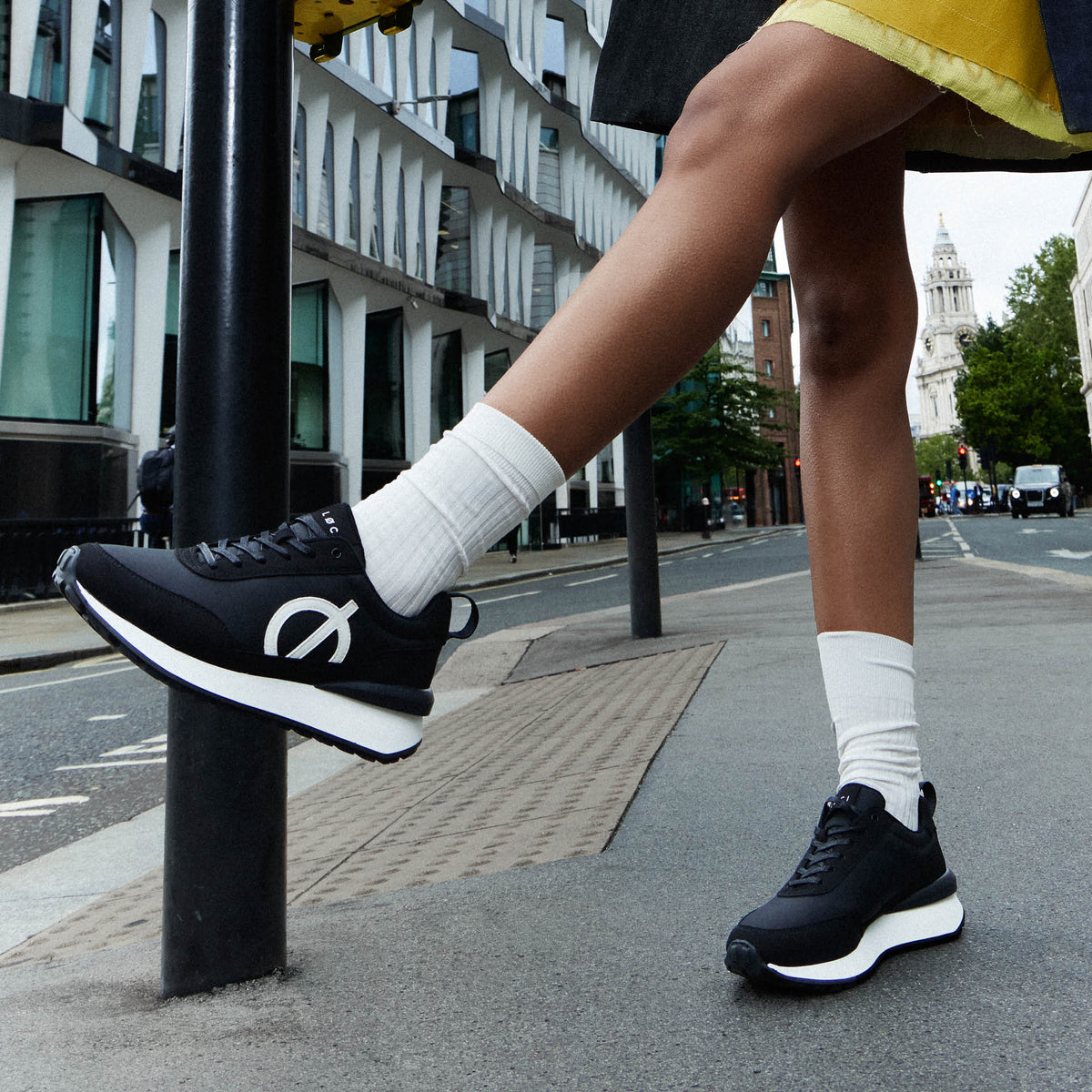
During a long urban day, your feet generate warmth and perspiration. A trainer feels hotter when that moisture cannot move away or evaporate easily. The visible upper is only one part of the system: a dense lining, padded tongue, foam footbed or close-fitting toe box can reduce the space and airflow inside the shoe. If the trainer is too short or narrow, your toes may also press against warmer, less ventilated areas.
Odour is not caused by the vegan label. It is more closely linked to moisture, skin microbes, trapped residue and time. Damp socks can transfer moisture into the lining and insole; wearing the same pair again before it has dried keeps that cycle going. A fragrance spray may temporarily cover the smell, but it does not remove the damp conditions that allow odour to return.
Material construction changes the likely balance. Mesh, knit and perforations may support airflow, while canvas or other absorbent fabrics can hold moisture. Coated synthetics and plant-based leather-style surfaces may offer a more structured, moisture-resistant finish, but coatings and backing layers can reduce air exchange. Linings and insoles matter just as much as the upper, so treat these as useful tendencies rather than guarantees.


A practical after-wear routine for cooler, fresher trainers
Start with the low-fuss steps that address moisture rather than simply masking odour. Remove the trainers when you can, loosen the laces and open the tongue, then take out the insoles if they are designed to come out. Blot visible dampness with a clean cloth and leave the shoes and insoles in a cool, well-ventilated place. Do not put them on a radiator, use a hairdryer on high heat or seal them in plastic while they are damp.
Next, give the pair time between wears. Alternating two pairs is more effective than wearing one pair from the commute through to the evening, because the lining, foam and insole have a chance to dry. Store trainers on an open shelf or in a breathable fabric bag rather than an airtight container. Plain, absorbent paper can help draw out moisture and preserve shape; replace it if it becomes damp.
Then check the rest of the system. Wear clean socks that dry readily and change them if they are damp after the commute. If the toe box feels compressed, try a different size or shape rather than loosening the laces indefinitely. A breathable or moisture-managing replacement insole may help if the original is warm, damp or compressed, but it must fit securely and not crowd the foot. Replace a worn insole when cushioning has flattened, it stays damp or it no longer supports you comfortably.
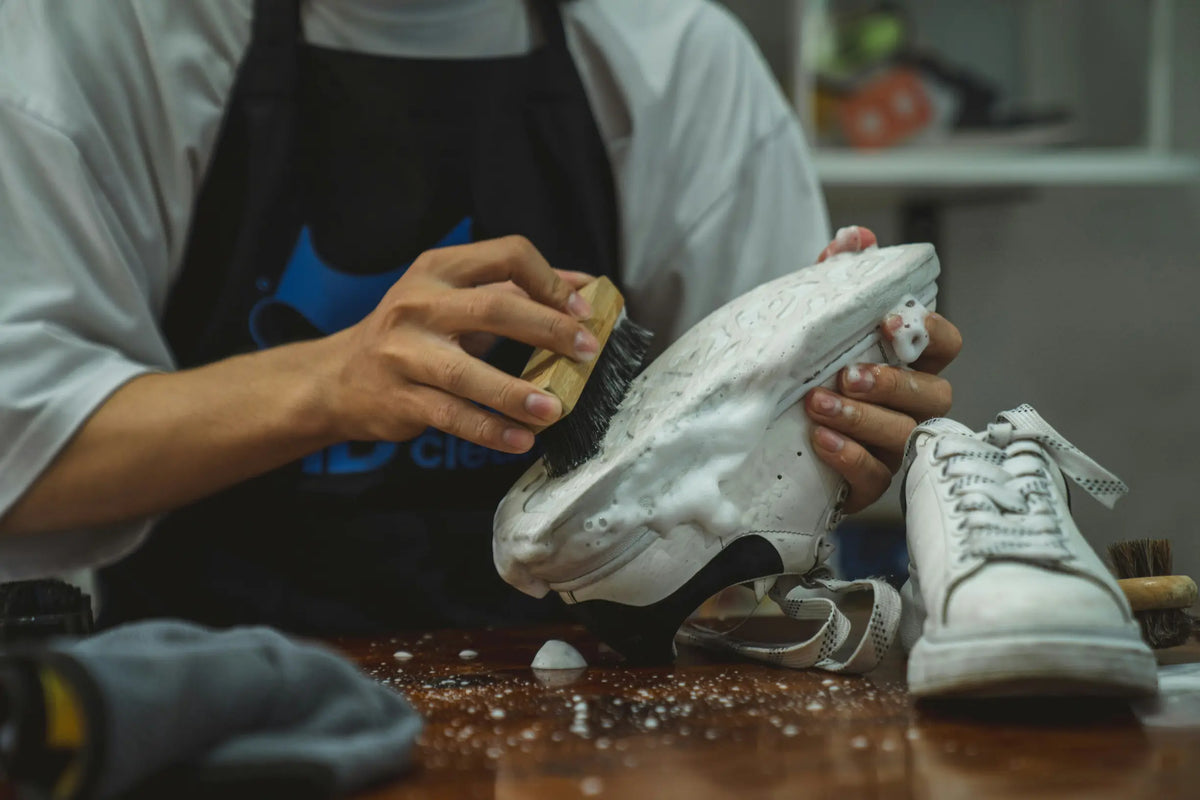
Finally, clean according to the upper and care label. Remove laces and insoles first, brush away dry dirt, and spot-test a mild cleaner on a hidden area. Wipe smooth coated surfaces with a damp cloth; treat knit or mesh gently with a soft brush and minimal moisture. Avoid prolonged soaking, harsh chemicals and machine washing unless the manufacturer specifically permits it. Blot, reshape with plain paper and air dry fully before reassembling. LØCI’s cleaning routine for vegan trainers offers a material-aware approach to spot-testing, separate insoles, gentle cleaning and air drying away from heat.


FAQ: vegan trainers, heat and odour
Are vegan trainers inherently hotter or smellier? No. “Vegan” describes animal-free material choices, not a single construction. Look at the upper, lining, insole, fit, socks and drying time together.
Which materials should I look for on long urban days? Check for construction details that suit your priorities: mesh, knit or perforations may support airflow, while denser coatings and plant-based leather-style panels may offer more structure or surface moisture resistance. LØCI’s plant-based materials guide explains the trade-offs.
Should I use odour powders or sprays? Treat them as optional, temporary aids rather than a solution. Patch-test products, and avoid anything that leaves the shoe damp, affects colour or irritates your feet.
When is it time to stop wearing the pair? Consider replacing or repairing trainers with persistent dampness, sole separation, failing support, a compressed insole or repeated pressure from a poor fit. Seek advice from a qualified healthcare professional if heat, odour, itching, pain, broken skin or another foot problem continues despite sensible hygiene and footwear changes.
When choosing or replacing trainers for long urban days, assess the complete construction rather than the vegan label alone. Compare likely airflow, lining warmth, toe-box space, insole options and the balance between structure and moisture resistance. Choose the pair that suits your commute, workday and evening plans, then care for it in a way that helps usable footwear last.