
Can You Wash Vegan Trainers in a Washing Machine?
Usually, no. Vegan trainers should not be put in a washing machine unless the exact manufacturer’s care instructions explicitly allow it. “Vegan” describes the source of the materials, not how they will respond to water, agitation, spin action or heat.
For LØCI trainers, the LØCI Care Guide does not recommend a washing machine because it may change the structure or finish of the materials used. The safer default is targeted hand or surface cleaning, using as little moisture as possible, followed by careful air-drying.
Before you clean, identify the pair’s care instructions, material mix and construction. A trainer with a coated upper, mesh panels, glued overlays, moulded foam, removable insoles and rubber components needs a more controlled approach than a simple fabric shoe.

Why a washing machine can damage vegan trainers
A full cycle exposes the whole trainer to conditions that are difficult to control. Prolonged soaking can affect coatings, padding and adhesives; agitation and spinning can flex or distort the upper; and heat can change the shape, finish or bond between components. Even if the visible upper looks washable, the construction underneath may not be.
Check the care label or product page first. Note the named materials and any restrictions on water, detergents, brushing or drying. Then inspect the pair: are panels glued or stitched, is the sole bonded to the upper, are there moulded foam sections, and can the insoles and laces be removed? If the instructions are missing or unclear, choose surface cleaning instead. A machine cycle remains only a conditional exception where the exact manufacturer’s instructions expressly permit it; never rely on the presence of canvas, knit or mesh alone, and do not use a tumble dryer.

The safer cleaning routine: clean each part, not the whole trainer
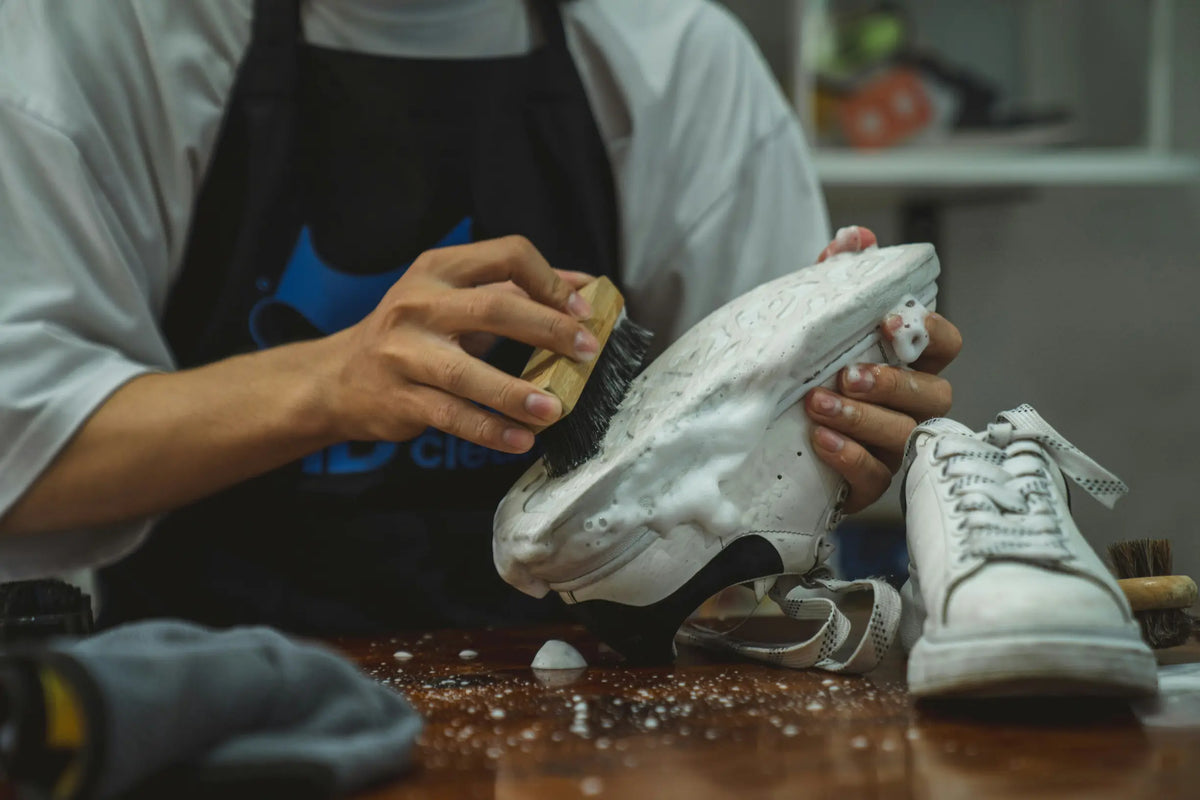
Start with dry cleaning. Remove the laces and insoles if they are removable, then gently brush or shake off loose grit with a soft, dry brush. This stops dirt from becoming a wet paste and reduces the temptation to scrub hard.
For the upper, mix a small amount of mild cleaner with water only if the care instructions allow it. Dampen a soft cloth or suitable soft brush rather than soaking the trainer. Patch-test an inconspicuous area first, then work in small sections. Blot or wipe lifted dirt away; do not aggressively rub, flood the seams or leave the trainer standing in water. Stop if the colour, texture or finish changes.
Treat the laces separately if their instructions allow washing, and clean insoles with minimal moisture so the foam or backing is not saturated. Wipe rubber outsoles and midsoles with a separate cloth or soft brush. Keep stronger cleaning products away from delicate uppers, trims and glued joins, and never assume that bleach, whitening recipes, solvents or abrasive pastes are safe.

Material-specific cleaning, drying and troubleshooting
Smooth vegan leather or coated synthetic uppers: use a barely damp, soft cloth and a mild cleaner approved for that material. Wipe rather than scrub, and dry the surface promptly. Excess water, harsh chemicals and repeated abrasion can dull, crack or otherwise alter a coating; patch-test first because finishes vary.
Canvas: remove dry dirt, then use a small amount of diluted mild cleaner on a cloth or soft brush. Avoid soaking fabric, lining or bonded sections. Mesh and knit need even less pressure and moisture: dab rather than forcing a brush into the structure, which can snag, stretch or retain water.
Suede-like or microfibre uppers: begin with a dry, soft brush suited to the finish. If the care instructions allow moisture, use very little on a cloth and lift the mark gently without flattening the nap. Do not use a general leather product unless the manufacturer confirms compatibility.
Rubber outsoles, midsoles and trims can be cleaned separately with a damp cloth or soft brush, subject to the product instructions. Keep solution at the outsole and away from the upper and glued joins. Stitched areas may tolerate more local handling than bonded overlays, but neither should be saturated.
For fresh mud, let heavy deposits dry enough to brush away, then spot-clean the remainder. For oil, ink, salt marks and scuffs, blot fresh residue and use the mildest material-appropriate method; avoid solvents and strong household products. Stop if a mark spreads or colour lifts. Persistent or unknown stains are better assessed by the manufacturer or a professional cleaner.
For odour, remove and air the insoles separately, clean them only as their instructions permit and let every component dry fully before reassembly. Ventilation and rotating pairs can help prevent trapped moisture; fragrance alone only masks a problem.
After cleaning, blot excess moisture with a clean towel. Reshape the trainers with uncoloured paper or a suitable shoe form, remove the paper if it becomes damp, and air-dry them in a well-ventilated place away from radiators, tumble dryers, direct sunlight and other high heat. Do not reassemble or wear them until the upper, lining, insoles and joins are fully dry.
Frequently asked questions
Can I machine-wash canvas, mesh or knit vegan trainers? Only if the exact manufacturer’s instructions expressly permit it. The material name alone is not enough.
What if colour bleeds or the finish changes? Stop immediately, blot without rubbing and allow the area to dry naturally. Contact the manufacturer before trying another product.
What if the sole separates or glue softens? Stop wearing the pair and do not apply household glue. Seek the brand’s repair advice or a suitable professional repair service.
When should I use a professional cleaner? Consider one for persistent stains, dye transfer, delicate finishes, significant odour or structural damage, especially when the material mix is unclear.
How can I reduce future cleaning? Brush off loose dirt early, clean small marks promptly, allow trainers to dry between wears, rotate pairs and follow the manufacturer’s protective-care guidance. For LØCI trainers, the Protector Kit 50 and Cleaning Kit 50 are relevant LØCI options, not universal requirements for every vegan trainer.
Vegan trainers are not automatically machine-washable. Check the exact care instructions first, then protect the upper and construction with the mildest effective, targeted method: remove loose dirt, use minimal moisture, patch-test, blot rather than scrub, and clean the upper, soles, laces and insoles separately.
Careful drying matters just as much as cleaning. Reshape the pair and let it air-dry fully away from heat and direct sun. Regular light cleaning, rotation and prompt attention to marks can help extend useful wear and reduce avoidable replacement.