
10 Types of Recycled Materials Used to Make Vegan Trainers
Most trainers carry a hidden environmental cost, from the virgin plastics in the upper to the synthetic rubber underfoot, yet a growing wave of vegan footwear is proving that performance and sustainability can share the same sole. Recycled materials, once considered a compromise, are now being engineered into trainers that rival their conventional counterparts in durability, comfort, and design.
From ocean-recovered plastics and reclaimed rubber to cork, recycled foam, and fabric offcuts, the range of materials reshaping vegan trainers is broader than most people realise. This guide breaks down ten of those materials, explaining what each one is, where it comes from, and what to look for when choosing a pair built to a higher standard.

1. Why recycled materials are reshaping vegan footwear
The fashion industry generates enormous volumes of textile waste, and vegan trainer manufacturers are increasingly diverting that waste into functional shoe components rather than letting it reach landfill or incineration. Reclaimed ocean-bound plastics, recycled rubber, repurposed cork, and regenerated nylon derived from fishing nets and industrial waste all feature across the uppers, soles, and linings of modern vegan trainers. Advances in fibre processing have brought the durability, breathability, and structural support of these reclaimed materials in line with virgin synthetics — so the environmental choice and the practical one have become the same choice.
When sizing up vegan trainers, the upper fabric usually gets the most scrutiny, but the sole, lining, and adhesives carry their own significant environmental footprint. These components are easy to overlook and often where greenwashing hides in plain sight. The use of recycled materials reaches further than the trainer itself, too. Demand for reclaimed content helps sustain the waste collection infrastructure that circular economy systems depend on, creating a chain of impact that runs from factory floor to local community.
Wear recycled fibres that keep bottles from landfill.

2. Turn ocean waste into the trainers on your feet
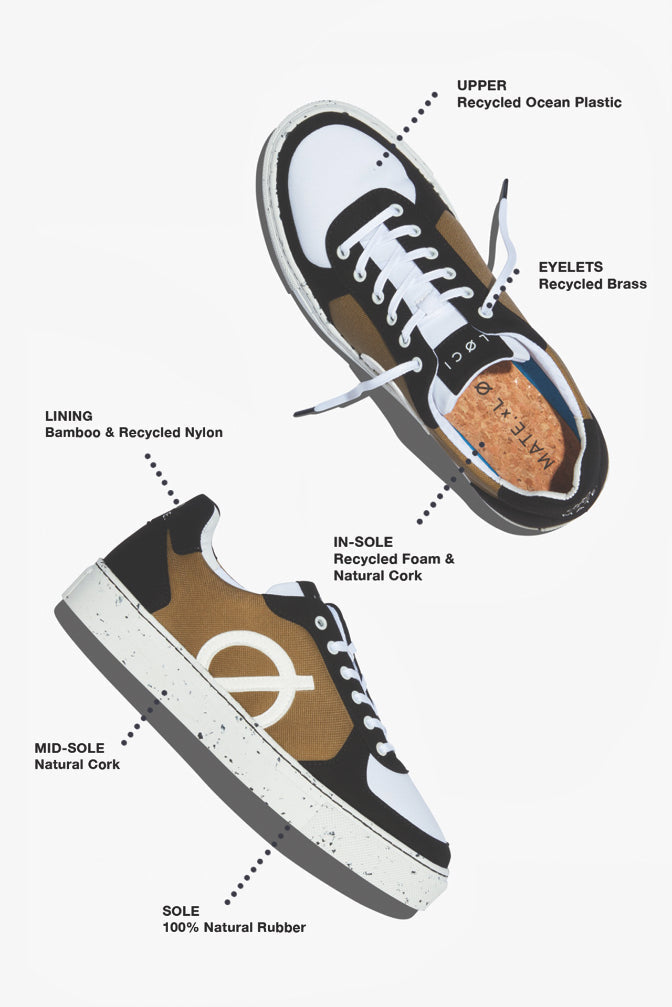
Ocean plastic waste, including discarded fishing nets and other recovered plastics, can be processed into recycled nylon or polyester fibres used to construct the uppers of vegan trainers. Abandoned fishing gear, often called ghost nets, ranks among the most destructive forms of marine pollution, entangling wildlife and persisting in ecosystems for centuries. Repurposing it into wearable textiles removes it from the marine environment while reducing demand for virgin synthetic materials. Before ocean-recovered plastics can be spun into yarn, they undergo a rigorous cleaning, shredding, and re-pelletising process, producing a technically engineered fabric with performance characteristics comparable to virgin synthetics.
When shopping for trainers made with ocean-derived materials, checking the product page or packaging reveals the specific source — and that detail matters. Post-consumer plastic waste and recovered fishing gear each carry a distinct environmental profile and deliver different material qualities. Redirecting ocean waste into durable consumer goods reduces reliance on petroleum-based materials, advancing a broader circular economy where pollution becomes a resource rather than something left to break down in marine environments.
Wear recycled plastic — this fleece saves bottles too.

3. How old clothes get a second life as recycled polyester
Recycled polyester has more than one origin story. Beyond reclaimed single-use plastics, old clothing and textile waste are increasingly being used as source material, shredded and melted into pellets before being spun into new yarn fibres that form the uppers, linings, and laces of vegan trainers. The process diverts garments from landfill and keeps the value of their fibres circulating across multiple product life cycles. Trainers that specify their recycled polyester derives from post-consumer textile waste, rather than industrial offcuts, signal a greater level of diversion from landfill and a more meaningful commitment to keeping materials in use.
Not every garment can be recycled into new polyester fibre. Blended fabrics such as cotton-polyester mixes are particularly difficult to break down, because separating the two materials at scale remains a genuine technical hurdle. Single-fibre garments are far easier to process, making them a more reliable feedstock for truly circular recycled polyester. When researching trainers, checking whether the recycled polyester originates from single-fibre post-consumer clothing is one of the more meaningful ways to gauge how seriously a brand is engaging with a circular fashion economy.
This fleece keeps recycled polyester circulating, not landfilled.

4. Reclaimed rubber that performs without the environmental cost
Reclaimed rubber for vegan trainer outsoles comes from old tyres, industrial offcuts, and post-consumer rubber waste, diverting material from landfill and cutting out the need for new resource extraction entirely. Natural rubber harvesting, by contrast, drives deforestation and significant land use changes. Reclaimed rubber sidesteps those costs at the source. The reclaiming process typically involves devulcanisation, a chemical or mechanical technique that breaks down the cross-linked polymer chains in cured rubber, freeing it to be reprocessed and remoulded into functional outsoles.
Reclaimed rubber holds up. Despite coming from waste streams, it retains strong mechanical properties, including abrasion resistance and grip, making it well-suited to outsoles that need to handle repeated impact, wet surfaces, and varied terrain. That said, not all products use reclaimed rubber exclusively. Some manufacturers blend it with virgin materials, which dilutes the environmental benefit. When assessing a trainer, look for clear disclosure of the percentage of recycled rubber content in the sole, so you know exactly what you are buying.
See a vegan sole built for real transparency.

5. Cork: the sustainable material that works harder over time
Cork stands apart from most footwear materials because harvesting it causes no lasting damage to the source tree. Workers strip the bark from cork oak trees, which then regenerates fully, allowing the same tree to be harvested repeatedly across a lifespan that can stretch for several centuries. The forests these trees form are among the most biodiverse ecosystems on the planet, supporting hundreds of species of plants, birds, and mammals, meaning that demand for cork directly funds the preservation of these habitats.
Beyond its environmental credentials, cork brings real performance benefits to trainer construction. Its natural cellular structure, made up of millions of tiny air-filled chambers, delivers lightweight cushioning and shock absorption, while its antimicrobial and moisture-resistant properties manage odour and keep feet comfortable. When a pair of trainers reaches the end of its life, cork components can be ground down and repurposed into flooring, insulation, or new footwear parts, keeping the material in active circulation rather than sending it to landfill.
Wear recycled fibres that also keep bottles from landfill.

6. The surprising second life of recycled cotton and fabric offcuts
Cotton offcuts and fabric waste from garment manufacturing are collected, shredded, and re-spun into new yarn, diverting textile waste from landfill while consuming significantly less water than producing virgin cotton. Those same fabric offcuts can be processed into felt-like materials or woven panels used in the uppers of vegan trainers, so waste from one industry becomes the raw material for another. When assessing your options, look at the product details for the percentage of recycled content and whether it is pre-consumer (factory offcuts) or post-consumer (material recovered after use). A higher percentage points to a stronger, more measurable commitment to reducing textile waste.
The global fashion industry produces an enormous volume of cutting-room waste, and repurposing even a fraction of it into trainer uppers, linings, or insoles reduces reliance on raw virgin materials. Trainers built with recycled cotton components reward that effort with straightforward care: a gentle hand wash using mild soap and cool water preserves the integrity of the recycled fibres without stressing them. Proper care extends the life of the shoe, and a longer-lasting trainer means fewer replacements over time, compounding the ecological gains already woven into the material itself.
Wear recycled cotton that compounds your ecological gains.

7. The plant-based materials reshaping how trainers are built
Plant-based materials are reshaping how trainers are constructed, with options ranging from pineapple leaf fibre derived from agricultural waste to cactus leather that requires minimal water and no irrigation. Natural rubber tapped from rubber trees offers a fully plant-based alternative to petroleum-derived synthetic rubber, delivering comparable flexibility and durability in outsoles. Some mycelium and apple-based leathers have demonstrated abrasion resistance and breathability on a par with conventional leather and synthetics, challenging the notion that plant-based materials compromise performance.
When evaluating vegan trainers made from plant-based materials, look beyond the upper. The insole, lining, and adhesives frequently contain overlooked animal-derived ingredients, such as casein-based glues or wool padding, and these components deserve the same scrutiny. Plant-based materials also vary considerably in their environmental footprint, so understanding the sourcing and production process behind each material reveals a much clearer picture of its true impact.
See vegan Bio leather and rubber soles in action.

8. How Recycled Foam Delivers Superior Cushioning With a Fraction of the Waste
Recycled foam in vegan trainers typically starts life as post-industrial offcuts or reclaimed material from old footwear. Rather than ending up in landfill, that waste gets a functional second life in the midsole. Manufacturers grind it into crumb form, then re-bond it under heat and pressure, giving engineers precise control over density and firmness. The result performs comparably to virgin foam, without the compromise. That process also reduces dependence on ethylene-vinyl acetate, a material that relies heavily on petrochemical inputs. Each pair built with reclaimed foam represents a measurable reduction in fossil-fuel-derived raw material consumption, making the impact concrete rather than theoretical.
The cellular structure of recycled foam can be engineered to closely replicate the energy-return and shock-absorption properties of newly produced foam, so performance underfoot on long walks or runs does not have to take a back seat. When browsing vegan trainers, look for terms such as "recycled EVA" or "reclaimed midsole foam" in the product description or care label. These phrases confirm that the cushioning layer draws on recovered materials rather than freshly manufactured ones, giving you a clear signal about how a brand approaches material sourcing at the component level.
This fleece puts recycled material to everyday use.

9. The certifications that actually matter when choosing recycled vegan trainers
Third-party certifications offer a more reliable indicator of a recycled vegan trainer's credentials than brand claims alone. The Global Recycled Standard (GRS) independently verifies both the percentage of recycled content in a trainer and whether the supply chain meets social and environmental standards throughout production. The OEKO-TEX Standard 100 tests every component, including threads and labels, for harmful substances, placing scrutiny at the material level rather than only at the finished product stage. Vegan accreditation from recognised animal-free bodies confirms that no animal-derived materials or by-products entered production at any point, which is a separate consideration from recycled content or chemical safety certifications.
Because each certification covers a different aspect of sustainability, a trainer carrying multiple marks tells a more complete story than one relying on a single label. You can verify any certification logo on packaging or product pages directly through the certifying body's official website, confirming that the claim is current and that the specific product or manufacturer is genuinely registered.
Wear ethics visibly with this AMFORI-certified tee.

10. How to assess recycled material quality in vegan trainers
When assessing the quality of recycled materials in vegan trainers, start with third-party certification. The Global Recycled Standard (GRS) confirms that a stated percentage of recycled content is present and that an independent auditor has verified the supply chain — meaning the claims on the label have been tested, not just printed there. The source of that recycled content matters just as much as its presence. Post-consumer waste, such as reclaimed fishing nets or recovered ocean plastics, represents a more substantive environmental intervention than post-industrial offcuts, which manufacturers would typically reprocess internally regardless. The distinction signals whether a brand is genuinely diverting waste or simply tidying up its own production floor. Where durability data is available, look for abrasion resistance ratings or tensile strength figures. Recycled fibres and plastics can vary considerably in structural integrity depending on how many times the source material has been processed, so a trainer built from certified, traceable recycled content is not just an ethical choice — it is a more informed one.
How recycled materials interact with other components in a trainer matters more than most buyers expect, particularly when it comes to adhesives and dyes. Certain recycled substrates bond less effectively, which can compromise sole attachment and colour fastness over time. Brand transparency is equally telling. Look for disclosures that specify the exact percentage of recycled content per component, rather than broad claims like "made with recycled materials." That phrase can technically apply even when recycled content makes up only a small fraction of the overall construction. Pressing for that level of detail reveals whether a trainer's recycled credentials are substantive, or largely cosmetic.
The materials reshaping vegan trainers, from ocean-recovered plastics and reclaimed rubber to cork, recycled foam, and fabric offcuts, demonstrate that responsible sourcing and genuine performance are no longer in conflict. Each material carries its own environmental profile, and understanding those differences equips you to look beyond surface-level claims and identify trainers where recycled credentials run through every component.
The ten materials covered here connect directly to the certifications worth seeking, the quality indicators worth scrutinising, and the plant-based and reclaimed alternatives worth exploring, giving you a practical framework rather than a checklist. Choosing trainers built from recovered and renewable sources is ultimately a decision that extends well beyond your wardrobe, feeding into the waste collection systems, habitat preservation efforts, and circular manufacturing processes that depend on consistent consumer demand to function.